


 INDIA ASIAN GAMES MEDAL MONITOR
·
India: 🥇 0
| 🥈 0
| 🥉 0
| Total: 0
INDIA ASIAN GAMES MEDAL MONITOR
·
India: 🥇 0
| 🥈 0
| 🥉 0
| Total: 0
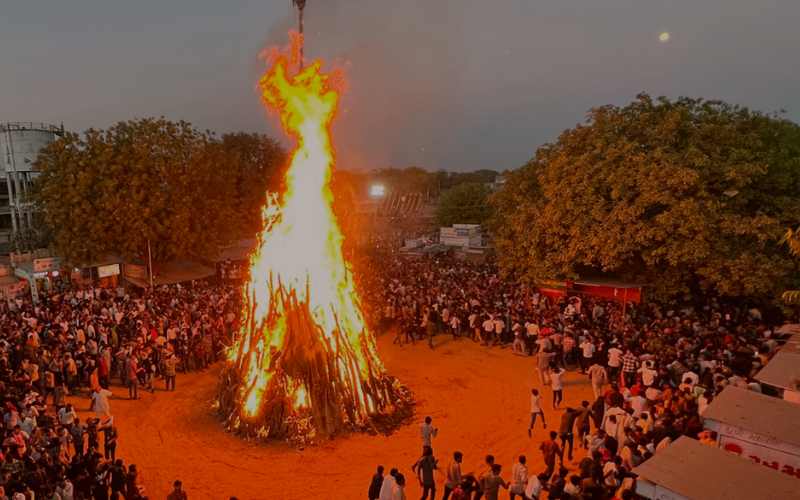
Holika Dahan: The Fire That Illuminates Faith and Conscience
On the eve of Holi, as twilight settles and communities gather around rising flames, India observes Holika Dahan, a ritual that is both ancient and deeply symbolic. The bonfire lit on this full moon night of Phalguna is not merely a ceremonial act; it is a powerful reminder of the enduring triumph of righteousness over tyranny, devotion over arrogance, and truth over oppression.
The origins of Holika Dahan lie in the Puranic tale of Prahlad and his father, King Hiranyakashipu. The king, intoxicated by power and armed with a boon that made him nearly invincible, demanded absolute obedience and divine status from his subjects. Yet his own son refused to bow to him, choosing instead unwavering devotion to Lord Vishnu. Infuriated by what he saw as defiance, Hiranyakashipu attempted repeatedly to eliminate Prahlad. His final scheme involved his sister Holika, who possessed a boon that protected her from fire. She sat in a blazing pyre with Prahlad in her lap, intending to destroy him in the flames.
What followed became one of the most enduring metaphors in Indian spiritual tradition. Prahlad emerged unharmed, protected by his faith, while Holika, who had misused her divine gift, perished in the fire. Holika Dahan commemorates this turning point, the moment when arrogance was reduced to ashes and devotion stood unscathed.
The ritual itself carries layers of meaning beyond mythology. The bonfire represents purification, the burning away of resentment, ego, and negativity accumulated over time. As families and neighbors circumambulate the flames, they symbolically surrender their fears and imperfections to the fire. In agrarian communities, offerings of new harvest grains into the blaze reflect gratitude and hope for prosperity in the coming season. Holika Dahan thus bridges spiritual symbolism with seasonal renewal, marking the end of winter and the arrival of spring.
In contemporary society, the message of Holika Dahan remains strikingly relevant. The story reminds us that power without humility ultimately collapses under its own weight. It reinforces the idea that moral conviction, even when isolated, carries transformative strength. In times marked by political contestation, social tensions, and ideological divisions, the festival’s core teaching resonates quietly but firmly: righteousness may be tested, but it is not extinguished.
The communal aspect of Holika Dahan is equally significant. Villages, towns, and urban neighborhoods come together to prepare the pyre, share prayers, and celebrate collectively. In doing so, the ritual becomes an instrument of social cohesion. It creates a shared cultural memory that transcends generational divides and reinforces a sense of belonging.
At the same time, modern awareness has encouraged more environmentally conscious celebrations. Many communities now advocate for smaller, symbolic bonfires to reduce deforestation and pollution. This adaptation reflects an evolving understanding that preserving nature is itself a form of righteousness, aligning the festival’s ancient symbolism with contemporary responsibility.
Holika Dahan is, at its heart, a meditation on resilience. It teaches that faith can withstand persecution, that ethical conviction can survive intimidation, and that justice may be delayed but not denied. The flames that rise into the night sky each year do more than illuminate the darkness; they reaffirm a civilizational belief that goodness endures.
As the fire crackles and sparks ascend, it invites reflection. What must we let go of? What prejudices, grievances, or fears should be consigned to the flames? The ritual offers not only celebration, but introspection. In that quiet moment before colors fill the air the next morning, Holika Dahan reminds us that renewal begins with the courage to stand firm and the wisdom to let go.
Disclaimer: The opinions expressed in this article are those of the author's. They do not purport to reflect the opinions or views of The Critical Script or its editor.
Beliefs And Myths Related Posts






Newsletter!!!
Subscribe to our weekly Newsletter and stay tuned.
Related Comments