


 INDIA ASIAN GAMES MEDAL MONITOR
·
India: 🥇 0
| 🥈 0
| 🥉 0
| Total: 0
INDIA ASIAN GAMES MEDAL MONITOR
·
India: 🥇 0
| 🥈 0
| 🥉 0
| Total: 0
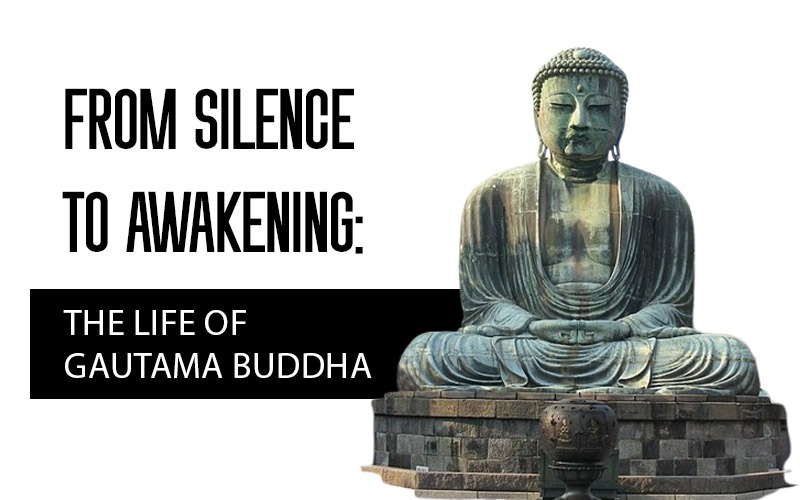
From Silence to Awakening: The Life of Gautama Buddha
Prologue: A Birth Foretold
In the quiet groves of Lumbini, beneath a sal tree heavy with bloom, was born a child whose life would alter the moral imagination of humanity. Siddhartha Gautama, heir to the Shakya lineage, entered a world already brimming with prophecy. Seers foresaw in him a dual destiny: that of a universal monarch or a world-renouncing sage. His father, King Śuddhodana, intent on securing the former, built around the young prince a life so refined, so meticulously insulated, that suffering itself seemed a distant fiction.
Yet destiny, unlike architecture, is not easily contained.
The Unraveling of Illusion
The carefully curated world of Siddhartha began to fracture when he ventured beyond the palace gates. What he encountered has since been distilled into the enduring motif of the Four Sights: age, illness, death, and renunciation. These were not merely spectacles but revelations, each encounter peeling away the illusion of permanence and pleasure.
Where the first three unveiled the inescapable architecture of suffering, the fourth, the serene ascetic, offered a counterpoint: the possibility of transcendence. In that silent contrast lay the germ of Siddhartha’s lifelong quest.
Renunciation: The Courage to Depart
At twenty-nine, in an act both intimate and immense, Siddhartha abandoned the privileges of royalty, his palace, his wife Yasodhara, his infant son Rahula. This departure, remembered as the Great Renunciation, was not a rejection of love but a radical expansion of it. He set out not merely to understand suffering, but to dismantle it at its root.
His early years as a seeker were marked by intellectual rigor and physical extremity. Under renowned teachers, he mastered meditative states; through ascetic practice, he tested the very limits of the human body. Yet neither yielded the clarity he sought. Starvation did not illuminate truth; it merely obscured it.
From this impasse emerged a principle both simple and profound, the Middle Way: a path that rejects excess in all its forms, whether indulgent or austere.
Enlightenment: The Stillness That Reveals
At Bodh Gaya, seated beneath the Bodhi tree, Siddhartha entered a meditation of unparalleled depth. Tradition speaks of Mara, the embodiment of illusion, who assailed him with fear, desire, and doubt. Yet Siddhartha remained unmoved, grounded in a stillness that was neither passive nor withdrawn, but luminously aware.
By dawn, that stillness ripened into awakening. He saw existence as it is: a web of impermanence, bound by craving, sustained by ignorance. He discerned, with crystalline clarity, both the origin of suffering and the means of its cessation.
Siddhartha Gautama had become the Buddha - the Awakened One.
The Architecture of Wisdom
The Buddha’s teaching, or Dharma, is remarkable not for metaphysical speculation but for its precision. It neither demands blind faith nor promises divine intervention; instead, it offers a method, a disciplined inquiry into the nature of experience.
At its core lie the Four Noble Truths:
That suffering (dukkha) permeates existence
That it arises from craving and attachment
That it can be brought to an end
That there exists a path leading to its cessation
This path, the Noble Eightfold Path, is not linear but integrated, a convergence of ethical conduct, mental discipline, and wisdom. It is as much a philosophy as it is a practice, demanding not belief but transformation.
Sarnath: The Turning of the Wheel
In the deer park of Sarnath, the Buddha delivered his first discourse to five former companions. This moment, known as the Dharmachakra Pravartana, the turning of the Wheel of Dharma, was less a proclamation than an invitation: to see, to question, to awaken.
From this modest beginning emerged the Sangha, a community bound not by lineage or hierarchy, but by shared pursuit of truth.
A Life in Motion
For over forty years, the Buddha walked the dusty plains of northern India, teaching in forests, villages, and courts alike. His audience was as varied as humanity itself, kings and courtesans, merchants and mendicants, skeptics and seekers.
He spoke in a language stripped of ornament, yet rich in insight. He dismantled rigid hierarchies, challenged ritual orthodoxy, and placed ethical intention above inherited identity. In a world deeply stratified by caste, his vision was quietly radical: that liberation was available to all.
The Final Passing
In Kushinagar, at the age of eighty, the Buddha lay between twin sal trees, entering Mahaparinirvana, the final release beyond the cycle of birth and death. His last exhortation was neither mystical nor grand, but characteristically lucid: “Be a light unto yourselves.”
Epilogue: A Timeless Resonance
The life of Gautama Buddha resists simplification. It is neither myth alone nor history alone, but a living inquiry, one that continues to unfold wherever there is suffering and the courage to confront it.
His legacy does not reside merely in monuments or scriptures, but in a method: to observe without illusion, to act without attachment, and to live with a clarity that is at once deeply human and profoundly liberating.
In an age still restless with desire and uncertainty, the Buddha’s life endures not as a relic of the past, but as a quiet, insistent possibility.
Disclaimer: The opinions expressed in this article are those of the author's. They do not purport to reflect the opinions or views of The Critical Script or its editor.
Beliefs And Myths Related Posts






Newsletter!!!
Subscribe to our weekly Newsletter and stay tuned.
Related Comments