


 INDIA ASIAN GAMES MEDAL MONITOR
·
India: 🥇 0
| 🥈 0
| 🥉 0
| Total: 0
INDIA ASIAN GAMES MEDAL MONITOR
·
India: 🥇 0
| 🥈 0
| 🥉 0
| Total: 0
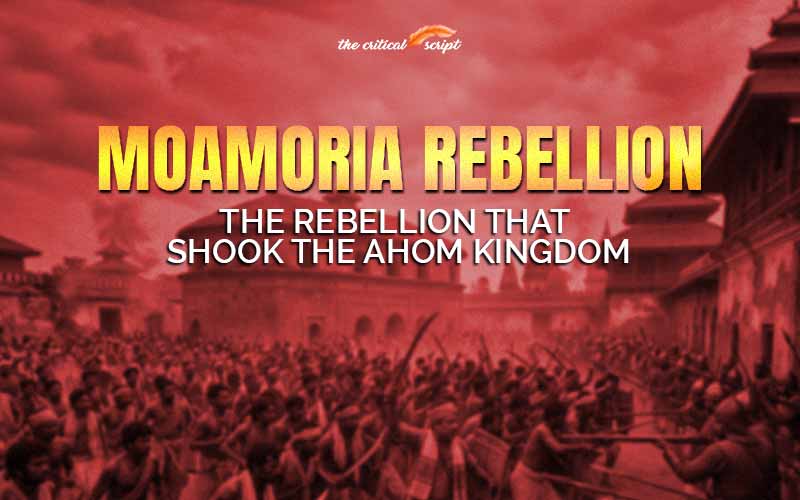
The Moamoria Rebellion: The Conflict That Shook the Ahom Kingdom
Introduction
The Moamoria
Rebellion was one of the most significant and prolonged internal conflicts in
the history of Assam. Fought between the followers of the Mayamara (Moamoria)
sect and the Ahom monarchy, the rebellion lasted from 1769 to 1805 and greatly
weakened the Ahom Kingdom. More than a simple revolt, it was the result of deep
social, religious, and political tensions that had been building for decades.
Many historians consider
the Moamoria Rebellion a turning point in Assam's history because its
consequences extended far beyond the battlefield. The conflict not only
challenged Ahom authority but also contributed to the gradual decline of a
kingdom that had ruled Assam for nearly six centuries.
The Rise of the Mayamara Sect
The origins of the
rebellion can be traced to the MayamaraSattra, a Vaishnavite religious
institution founded by Aniruddhadeva. The followers of this Sattra came to be
known as Mayamaras or Moamoriyas.
One of the unique
features of the Mayamara sect was its inclusive nature. Unlike many religious
institutions of the time, it welcomed people from different social backgrounds.
As a result, it attracted a large following among communities such as the Morans,
Motoks, Chutias, Kaivartas, and other groups who often remained outside the
centres of political power.
As the influence of
the Sattra grew, so did its importance in society. However, its popularity also
brought it into conflict with the Ahom establishment and the religious groups
that enjoyed royal patronage.
Causes of the Rebellion
Several factors
contributed to the outbreak of the Moamoria Rebellion.
One of the most
important was the Paik System, which formed the backbone of Ahom
administration. Under this system, able-bodied men were required to provide
labour and military service to the state. While the system had served the
kingdom for centuries, it gradually became burdensome for many people.
The MayamaraSattra
often provided refuge to those seeking relief from the demands of the Paik
System. This naturally made the Ahom rulers suspicious of the Sattra's growing
influence.
Religious tensions
further worsened the situation. During the reign of RudraSingha, increasing
support was given to Brahminical institutions. Later, efforts were made to
strengthen Shaktism, which stood in contrast to the MahapuruxiyaVaishnavite
tradition followed by the Moamoriyas. The situation became more strained during
the reign of SibaSingha, particularly under PhuleswariKunwari, whose policies
were viewed as hostile towards the Vaishnavite sects.
The immediate spark
came from a series of incidents involving Ahom officials and Moamoria leaders.
Nahar, a Moran chief, was reportedly insulted and punished by Kirti Chandra
Barbarua after presenting elephants that were considered unsuitable. Already
angered by earlier persecutions, many Moamoriyas saw this as an act of
humiliation. Tensions escalated further when the MoamoriaGossain was also
insulted. These incidents added fuel to existing grievances and pushed the
movement towards open rebellion.
The First Uprising
The first major
uprising began during the reign of Lakshmi Singha in 1769. The rebels, led
primarily by Moran and Moamoria forces and supported by three exiled Ahom
princes, marched towards Rangpur, the capital of the Ahom Kingdom.
After defeating royal
forces in several engagements, the rebels captured Rangpur on 21 November 1769.
Lakshmi Singha was taken prisoner, and Ramananda, the son of Naharkhora, was
placed on the throne. Several Ahom officials were executed, while rebel leaders
assumed positions that had previously belonged to the Ahom administration.
For a brief period,
it appeared that the rebels had successfully overthrown Ahom authority.
However, their success was short-lived. Although they had won on the
battlefield, they lacked experience in administration and governance.
Restoration of Ahom Rule
The Ahoms soon
regrouped and launched a counteroffensive. Within a short period, Lakshmi
Singha was restored to the throne and Ahom authority was re-established in
Rangpur.
The restoration came
at a heavy cost for the rebels. Many prominent leaders, including Ramananda and
other important supporters of the movement, were captured and executed. While
the Ahoms had regained control of the capital, the deeper issues that had
caused the rebellion remained unresolved.
The Rebellion Resurfaces
The conflict
resurfaced in 1782 when GovindaGaoburha led another challenge against Ahom
rule. Although this uprising was eventually suppressed, the rebellion continued
through guerrilla warfare led by figures such as Lephera and Parmananda.
A new and more
powerful phase began in 1786 under the leadership of Harihar Tanti. The rebels
once again gathered strength and expanded their influence across large parts of
the kingdom. During this period, Pitambar, a descendant of the Moamoria
religious leadership, was freed from captivity, further strengthening the
movement.
By 1788, the
rebellion had become so powerful that King GaurinathSingha was forced to flee
Rangpur. Different rebel leaders administered different territories under their
control. Harihar Tanti exercised authority over areas on the north bank of the
Brahmaputra, while Sarbananda controlled the Moran regions centred
aroundBengmara (modern day Tinsukia).
Bharat was declared
king, and coins were reportedly issued in his name as well as in the name of
Sarbananda. For a time, it seemed that the Ahom Kingdom itself might collapse.
Intervention of the East India Company
Facing a serious
crisis, GaurinathSingha sought outside assistance. Through intermediaries, he
appealed to the East India Company for military support.
Governor-General Lord
Cornwallis responded by sending Captain Thomas Welsh with a force of trained sepoys. Welsh entered Assam in 1792 and gradually helped
restore Ahom authority over important territories.
In 1794, Rangpur was
successfully recovered and Ahom rule was re-established. The intervention
demonstrated the effectiveness of trained standing forces compared to the
traditional Paik-based military system.
Although Thomas Welsh
later withdrew from Assam, the rebellion had suffered a major setback.
The End of the Rebellion
The reign of
KamaleswarSingha witnessed several localized revolts, but these were gradually
brought under control. Important rebel leaders either died, were killed, or
accepted settlements with the Ahom state.
One of the most
significant outcomes was the recognition of Sarbananda's authority over the
Matak territory. He was granted the title of Barsenapati and allowed to govern
the region with considerable autonomy.
By 1805, the long
conflict had effectively come to an end.
Consequences of the Rebellion
The consequences of
the Moamoria Rebellion were far-reaching. The prolonged conflict caused heavy
loss of life, economic disruption, and widespread instability. Agricultural
production suffered, settlements were damaged, and many regions experienced
years of uncertainty.
The rebellion also
weakened the Paik System, which had long been the foundation of Ahom
administration and military organization. As a result, the Ahom state found it
increasingly difficult to maintain its authority.
More importantly, the
Ahom Kingdom emerged from the conflict politically and militarily weakened. It
never fully recovered its former strength.
This weakness became
evident during the Burmese invasions that began in 1817. The invasions brought
immense destruction to Assam and further destabilized the region. Eventually,
after the First Anglo-Burmese War, the Treaty of Yandabo was signed in 1826,
bringing Assam under British rule.
Conclusion
The Moamoria
Rebellion was much more than a conflict between rebels and rulers. It reflected
deep social, religious, and political tensions within the Ahom Kingdom and
exposed weaknesses in the existing system of governance.
Lasting for over three decades, the rebellion
played a major role in weakening Ahom power and reshaping the course of Assam's
history. Even today, it remains one of the most important chapters in the states
past, reminding us how internal divisions can alter the fate of a kingdom.
Disclaimer: The opinions expressed in this article are those of the author's. They do not purport to reflect the opinions or views of The Critical Script or its editor.
History And Facts Related Posts





Newsletter!!!
Subscribe to our weekly Newsletter and stay tuned.
Related Comments