


 INDIA ASIAN GAMES MEDAL MONITOR
·
India: 🥇 0
| 🥈 0
| 🥉 0
| Total: 0
INDIA ASIAN GAMES MEDAL MONITOR
·
India: 🥇 0
| 🥈 0
| 🥉 0
| Total: 0
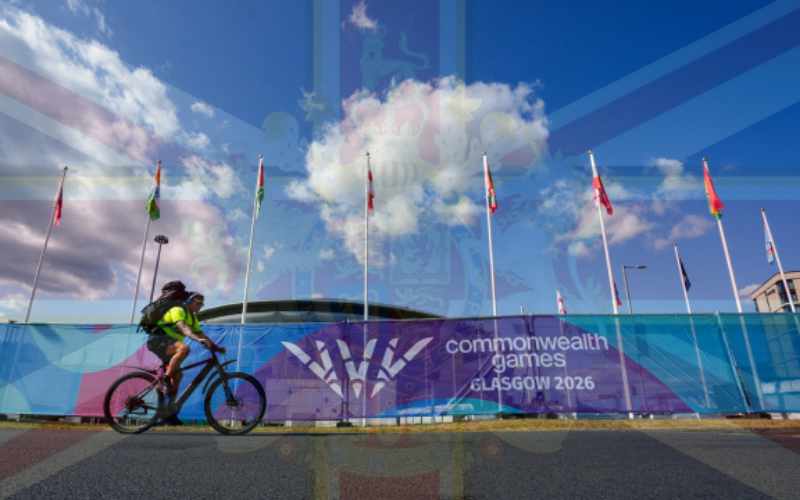
The Commonwealth Games: Why India Should Rethink Its Participation
For nearly a century, the Commonwealth Games have been marketed as a celebration of friendship, diversity, and sporting excellence. Athletes compete under the banner of fair play, and organisers speak of shared values among Commonwealth nations. Yet beneath the spectacle lies an uncomfortable truth: the Commonwealth Games are one of the last major global institutions whose identity is inseparable from the legacy of the British Empire.
For countries like India, that raises an important question. Should a nation that fought one of history's greatest anti-colonial struggles continue participating in an event born to celebrate an empire that once ruled it?
The Commonwealth Games did not emerge as a neutral sporting competition. They began in 1930 as the British Empire Games, conceived to strengthen imperial unity among Britain's colonies and dominions. The name has changed over the decades, but the institution itself remains a direct descendant of that imperial project. While the British Empire has disappeared from maps, its sporting festival survives.
Supporters argue that today's Commonwealth is voluntary and bears little resemblance to colonial rule. They are right that the modern Commonwealth promotes cooperation rather than conquest. Athletes certainly do not compete to celebrate empire. But institutions carry history, and symbols matter.
Across the world, nations are reassessing colonial legacies. Statues of imperial figures have been removed. Museums are returning looted artefacts. Universities are confronting uncomfortable histories. Governments increasingly acknowledge that colonialism was not merely a chapter of political administration but one of economic exploitation, racial hierarchy, and cultural suppression.
Sport should not be immune from that conversation.
India's colonial experience was neither benign nor brief. Nearly two centuries of British rule witnessed repeated famines, the destruction of indigenous industries, political repression, and massacres such as Jallianwala Bagh. Millions paid the price for imperial policies. For a country whose freedom movement was built on rejecting colonial domination, continued participation in an institution rooted in that same imperial framework appears, at the very least, contradictory.
This is not an argument against athletes. Indian sport has flourished at the Commonwealth Games. Wrestlers, weightlifters, shooters, badminton players, and boxers have inspired generations through their performances. Their achievements deserve admiration.
The issue is not the competitors. It is the symbolism of the platform.
Unlike the Olympics, which aspire to universality, or the Asian Games, which unite a geographical region, the Commonwealth Games exist because of a shared colonial history. Membership is determined not by geography or sporting merit but by historical association with the British Empire. That alone makes the event unusual in today's international sporting landscape.
The Games are also facing a crisis of relevance. Escalating costs have discouraged prospective hosts, leading to scaled-down editions and uncertainty about the event's future. If the Commonwealth Games are to survive, they cannot rely solely on nostalgia or historical ties.
Perhaps the answer is not abolition but reinvention.
If the Games are to remain meaningful in the twenty-first century, they should acknowledge the full complexity of their origins rather than quietly distancing themselves from them. An opening ceremony that recognises the experiences of colonised peoples, educational programmes that examine imperial history honestly, and a broader, more inclusive framework for participation could transform the event from a relic of empire into a platform for reconciliation.
An even bolder step would be to open participation beyond the Commonwealth, removing the exclusivity tied to Britain's former empire. Such a move would redefine the Games around sport rather than colonial history.
History should neither be forgotten nor romanticised. The Commonwealth Games cannot escape the fact that they were born from an imperial project. The question is whether they will continue to preserve that legacy uncritically or evolve into something that reflects the values of an equal, post-colonial world.
For India, this debate is not about mixing sports with politics. It is about recognising that some sporting institutions are themselves products of political history. A confident, independent nation should be willing to ask whether symbols inherited from empire still deserve unquestioned acceptance or whether it is time to imagine something better.
Disclaimer: The opinions expressed in this article are those of the author's. They do not purport to reflect the opinions or views of The Critical Script or its editor.
History And Facts Related Posts





Newsletter!!!
Subscribe to our weekly Newsletter and stay tuned.
Related Comments