


 INDIA ASIAN GAMES MEDAL MONITOR
·
India: 🥇 0
| 🥈 0
| 🥉 0
| Total: 0
INDIA ASIAN GAMES MEDAL MONITOR
·
India: 🥇 0
| 🥈 0
| 🥉 0
| Total: 0
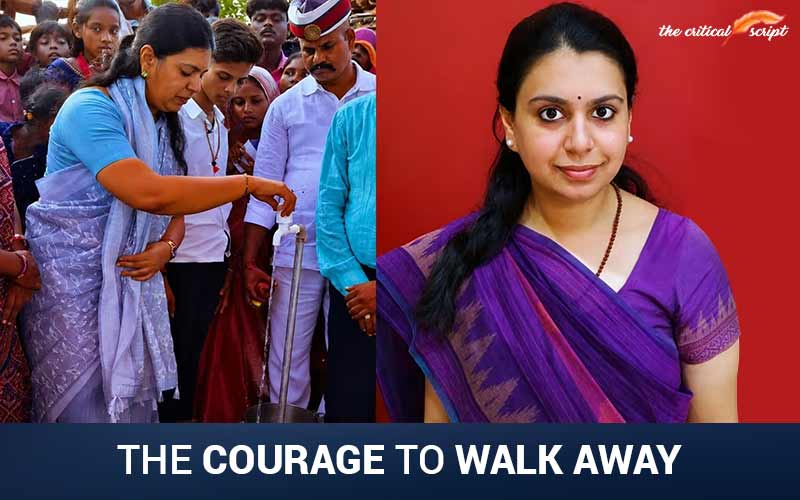
The Courage to Walk Away
Divya Mittal’s resignation from the IAS is not
merely the story of an officer leaving government service after 13 years. It is
a story that forces us to confront a much more uncomfortable question: what
happens when you finally achieve everything society told you would make your
life meaningful, and still find yourself asking what comes next?
Mittal had already ticked many of the boxes India associates with success. IIT Delhi. IIM Bangalore. A high-paying career in London's JP Morgan. Then she left it all behind, returned to India and chose the civil services. For many, that would have been the final destination. For her, it became another chapter.
And during those 13 years, there were moments when the abstraction of “public service” became painfully tangible. As District Magistrate in Mirzapur, she helped bring piped water to a remote village whose residents had depended on tankers for decades. In her farewell note, she wrote about families receiving land rights, farmers getting water and people with disabilities finding opportunities to live with dignity. Her most striking reminder was that behind every government file is a person.
Yet she has now voluntarily walked away from the very position millions of young Indians spend years preparing for.
And perhaps that is why this story has struck such a nerve.
We have built an entire social philosophy around the idea that life is a ladder. Study harder. Get into IIT. Get an MBA. Get a foreign job. Crack UPSC. Become an IAS officer. Earn the designation, the bungalow, the respect, the power. Then, presumably, happiness will arrive somewhere along the way.
But what if it doesn't?
Mittal had actually spoken about this question months before her resignation, arguing that elite education teaches us how to achieve, compete and carry responsibility, but does not necessarily teach us how to deal with loneliness, our own minds or the messy business of being happy.
That makes her resignation feel less like an abrupt
exit and more like the continuation of a question she had already been asking.
Of course, we should resist turning her decision into a simplistic indictment of the IAS, or pretending we know the private reasons behind it. She has not publicly attributed her resignation to any particular political or administrative controversy. There has been plenty of speculation online, but speculation is not evidence.
What we do know is far more interesting.
A woman who once left London because she felt something was missing by not being in her own country has now left the institution she once returned home to serve.
And that should make us pause.
Because perhaps success isn't always about climbing higher. Sometimes it is about having the courage to ask whether the ladder is still taking you where you want to go.
India will continue producing toppers, rank-holders, IITians, IIM graduates and civil servants. We should celebrate that.
But perhaps we also need to teach our children something harder: that a life cannot be measured entirely by the prestige of the institution at the top of their résumé.
Divya Mittal's story is not necessarily about giving up.
Maybe it is about refusing to confuse a position with a purpose.
And in a country obsessed with asking young people, “What do you want to become?”, perhaps the more important question is the one we rarely ask:
“What kind of life do you actually want to live?”
Disclaimer: The opinions expressed in this article are those of the author's. They do not purport to reflect the opinions or views of The Critical Script or its editor.
National Related Posts












Newsletter!!!
Subscribe to our weekly Newsletter and stay tuned.
Related Comments