


 INDIA ASIAN GAMES MEDAL MONITOR
·
India: 🥇 0
| 🥈 0
| 🥉 0
| Total: 0
INDIA ASIAN GAMES MEDAL MONITOR
·
India: 🥇 0
| 🥈 0
| 🥉 0
| Total: 0
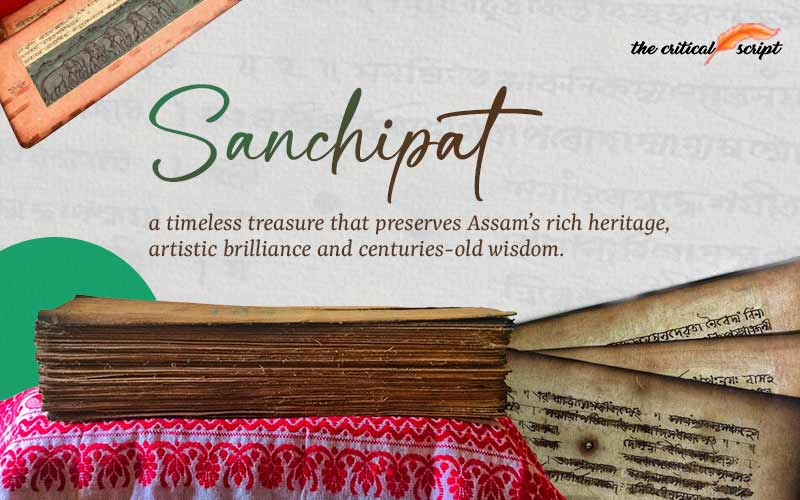
Sanchipat: The Timeless Manuscript Tradition of Assam
Sanchipat is one of
Assam’s most remarkable traditional writing materials, reflecting the region’s
rich literary, artistic and cultural heritage. Made from the specially treated
bark of the sānci aloe tree (Aquilaria malaccensis), Sanchipat has been used for
centuries to preserve literature, religious teachings, historical accounts and
artistic expressions. These manuscripts are an important part of Assam’s
intellectual legacy and provide a glimpse into the knowledge, creativity and
craftsmanship of earlier generations.
Origin and Historical Significance
The tradition of Sanchipat manuscript-making developed in Assam during the early centuries of the Common Era. Over time, it became an important medium for recording literary works, religious scriptures, philosophical ideas and historical narratives. Sanchipat holds particular significance in the tradition of Ekasarana Dharma, the Neo-Vaishnavite movement associated with Srimanta Sankardeva and Madhavdeva. Manuscripts written on Sanchipat helped preserve religious teachings, devotional literature and cultural traditions, allowing them to be passed down through generations. Some manuscripts were also decorated with intricate illustrations and paintings, combining the art of writing with visual storytelling.
The Art of Preparing Sanchipat
The preparation of Sanchipat required considerable skill, patience and knowledge of natural materials. The bark of the sānci tree was carefully processed and transformed into a smooth, durable writing surface. The bark was cut into rectangular strips, soaked and dried in the sun. It was then scraped, polished and burnished to achieve a smooth texture suitable for writing. In some traditional methods, mung bean paste was applied to prepare the surface and improve its finish. These carefully executed steps helped create pages capable of preserving written works for long periods.
The finished sheets were often arranged into manuscripts, which could be further decorated with borders, illustrations and other artistic details.
Traditional Colours and Decorative Techniques
Colour played an important role in the appearance of Sanchipat manuscripts. Traditional colouring techniques included the use of Hengul and Haital, pigments associated with red and yellow shades. Hengul, traditionally associated with vermilion-like red, and Haital, associated with yellow orpiment, were used to create decorative borders, highlights and other visual elements.
These colours gave the manuscripts a distinctive appearance and enhanced their artistic value. However, the pigments used in historical manuscripts may contain toxic substances, so they require careful handling during conservation and restoration.
Mahi: The
Traditional Black Ink
Another important aspect of Sanchipat manuscript-making was the preparation of Mahi, a traditional black ink. Historical ink-making methods used locally available natural ingredients, including fruits, tree bark, herbs and other substances. Some formulations also incorporated iron-rich materials to produce a dark, lasting colour. The preparation of ink required an understanding of natural ingredients and their properties. When combined with the smooth, carefully prepared surface of Sanchipat, the ink helped preserve written texts for generations.
The exact ingredients and methods could vary according to local practices and historical periods, reflecting the practical knowledge of traditional manuscript-makers.
Durability and Preservation
One of the most notable features of Sanchipat is its ability to preserve written material over long periods. Many surviving manuscripts remain valuable sources of information about Assam’s literature, religion, history and artistic traditions. Their longevity depends on several factors, including the preparation of the bark, the quality of the ink, storage conditions and protection from moisture, insects and other environmental threats. The survival of historical manuscripts demonstrates the importance of traditional craftsmanship, although preservation is never guaranteed under all conditions.
Today, conservation efforts, documentation and digitisation play an important role in protecting these fragile cultural treasures for future generations.
A Living Heritage of Assam
Sanchipat is much more than a traditional writing material. It represents the close relationship between nature, knowledge, art and spirituality in Assam’s cultural history. From the careful preparation of the bark to the creation of ink and decorative designs, every stage reflects the skill and dedication of traditional artisans and scribes.
As a repository of literary, religious and historical knowledge, Sanchipat continues to hold immense cultural significance. Preserving these manuscripts means safeguarding not only ancient texts but also the traditional techniques, artistic practices and collective memory of Assam.
Disclaimer: The opinions expressed in this article are those of the author's. They do not purport to reflect the opinions or views of The Critical Script or its editor.
Regional Related Posts











Newsletter!!!
Subscribe to our weekly Newsletter and stay tuned.
Related Comments