


 INDIA ASIAN GAMES MEDAL MONITOR
·
India: 🥇 0
| 🥈 0
| 🥉 0
| Total: 0
INDIA ASIAN GAMES MEDAL MONITOR
·
India: 🥇 0
| 🥈 0
| 🥉 0
| Total: 0
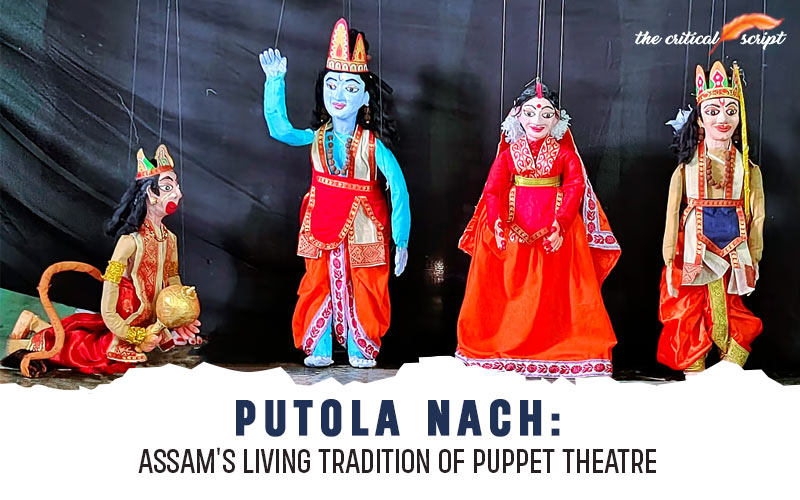
Putola Nach: Assam's Living Tradition of Puppet Theatre
The Strings That Carry a Civilization's Stories
Long before cinema, television, and
social media transformed entertainment, the people of Assam gathered in village
courtyards, temple premises, and open fields to witness stories come alive
through music, narration, and moving puppets. This captivating art form, known
as PutolaNach or PutalaNach, remains one of the oldest and most distinctive
traditions of Assamese folk theatre.
Derived from the Assamese words putola
(doll or puppet) and nach (dance), PutolaNach is not merely a puppet
show. It is a rich synthesis of storytelling, music, visual art, religious
devotion, and community engagement that has entertained, educated, and inspired
generations of Assamese people. Today, it stands as one of the few surviving
traditional puppetry forms in Northeast India.
Origins of an Ancient Tradition
The exact origins of PutolaNach are
difficult to determine, as the tradition evolved through oral transmission rather
than written documentation. However, scholars generally agree that puppetry has
deep roots in the Indian subcontinent, with references to animated dolls and
puppets appearing in ancient Indian literature, including the Mahabharata
and classical Sanskrit texts.
In Assam, PutolaNach developed as a
unique form of string puppetry, shaped by local cultural traditions and
religious movements. The art form gained particular prominence during the
Vaishnavite renaissance initiated by the 15th–16th century saint-scholar
SrimantaSankardeva, whose cultural movement transformed Assamese society
through literature, music, dance, drama, and devotional practices. Many
researchers trace the close relationship between PutolaNach and Bhaona, the
devotional theatre tradition introduced by Sankardeva. This connection is so
strong that the art is often referred to as PutolaBhaona in several parts of
Assam.
A Distinctive Form of String Puppetry
Unlike shadow puppetry traditions
found in southern India or rod puppets of eastern India, PutolaNach primarily
employs string-controlled wooden puppets.
These puppets are carefully crafted
from wood, bamboo, cloth, and locally available materials. Their faces are
painted with expressive features, while elaborate costumes reflect the character's
social status, personality, or mythological significance. Skilled puppeteers
manipulate the puppets through a network of strings, enabling them to walk,
dance, fight, bow, and enact dramatic scenes with surprising realism.
The making of the puppets is itself
an artistic tradition. In many cases, knowledge of puppet construction and
performance has been transmitted through generations within specific families,
making PutolaNach both a performing art and a hereditary craft.
Regional Variations Across Assam
One of the most fascinating aspects
of PutolaNach is its regional diversity. Researchers identify three major
performance traditions within Assam:
Lower Assam: Putola-Bhoariya and Putola-Bhaona
In Lower Assam, puppetry evolved
under the influence of folk theatrical forms such as Bhoariya and Bhaona.
Performances often combine religious themes with folk humour, songs, and social
commentary.
Majuli and Upper Assam
On the river island of Majuli, the
cultural heartland of Assamese Vaishnavism, smaller wooden puppets are commonly
used. These performances closely reflect the dramatic traditions associated
with the Satras and the AnkiaNaat theatrical style developed under Sankardeva's
influence.
Darrang and North Assam
In areas such as Kalaigaon in
Darrang district, PutolaNach incorporates multilingual songs and storytelling
traditions, drawing influences from Assamese, Bengali, and Karbi cultures.
Contemporary themes and elements from Assam's mobile theatre tradition have
also found their way into performances.
Stories That Shaped Generations
Historically, the repertoire of
PutolaNach has been dominated by stories from the great Indian epics.
The Ramayana
Episodes from the Ramayana remain
among the most popular narratives. Stories of Rama, Sita, Hanuman, and Ravana
have been performed for generations through Assamese puppetry, helping preserve
the epic's moral and cultural lessons. Scholars have noted that PutolaNach has
played an important role in maintaining the Ramayana tradition in Assam.
The Mahabharata
Scenes from the Mahabharata,
including tales of the Pandavas, Krishna, and the Kurukshetra War, are also
frequently performed.
Local Folklore and Legends
Beyond classical epics, puppeteers
have traditionally adapted Assamese folktales, local legends, and historical
narratives to engage rural audiences.
More Than Entertainment: A Tool for Social Education
One of the reasons for PutolaNach's
longevity has been its adaptability. Historically, puppetry served as a medium
for transmitting religious teachings and cultural values. In modern times,
PutolaNach has evolved beyond mythological storytelling to address contemporary
social issues and public awareness campaigns. Recognizing its ability to engage
rural audiences, performers have incorporated themes such as environmental
conservation, deforestation, wildlife protection, public health, family
welfare, literacy, women's empowerment, sanitation, drug abuse prevention, and
social harmony.
This ability to blend entertainment
with public education has allowed the tradition to remain relevant even in
changing times.
The Performance Experience
A traditional PutolaNach performance
is a collaborative effort involving multiple artists.
A typical PutolaNach troupe consists
of master puppeteers who skillfully manipulate the puppets, narrators who guide
the storyline, singers and musicians who provide musical accompaniment and
dramatic effect, and assistants who manage the costumes, props, and puppet
movements behind the scenes. Together, they create a captivating theatrical
experience that brings traditional stories and characters to life for the
audience.
The narration is often delivered in
Assamese verse and prose, accompanied by traditional musical instruments. The
puppets respond to the rhythm of the music, creating a theatrical experience
that combines movement, sound, and storytelling.
Audiences do not merely watch a
performance; they participate emotionally in the unfolding drama, laughing,
applauding, and responding to the characters as though they were living actors.
Challenges in the Modern Era
Despite its cultural significance,
PutolaNach faces serious challenges.
The rise of television, cinema,
digital entertainment, and changing lifestyles has dramatically reduced
audiences for traditional folk arts. Many puppeteer families struggle to
sustain themselves economically, and fewer young people are choosing to learn
the demanding skills required for puppet making and performance.
Urbanization and changing cultural
consumption patterns have further contributed to the decline of traditional
village-based performances.
As a result, some regional styles of
PutolaNach have become increasingly rare.
Preservation and Revival Efforts
Recognizing its importance, cultural
institutions, scholars, and artists have undertaken efforts to document and
preserve PutolaNach.
The art form has been included in
inventories of India's intangible cultural heritage, while cultural festivals,
workshops, and educational programmes continue to showcase its significance.
Traditional puppeteers have also begun adapting their performances for modern
audiences without abandoning the essence of the tradition.
These efforts are crucial, for the
loss of PutolaNach would mean the disappearance of a unique repository of
Assamese storytelling, craftsmanship, and cultural memory.
Why PutolaNach Matters Today
In an age dominated by digital
screens and instant entertainment, PutolaNach offers something increasingly
rare: a direct connection to community, tradition, and collective imagination.
Every puppet embodies the
craftsmanship of artisans. Every performance carries echoes of centuries-old
stories. Every string connects the present generation to a living heritage that
has survived through devotion, creativity, and resilience.
PutolaNach is not merely a relic of
the past. It is a reminder that culture lives through performance,
participation, and transmission.
For centuries, PutolaNach has served
as Assam's moving theatre of memory, bringing gods, heroes, villains, and
ordinary people to life through wood, cloth, music, and imagination.
Its enduring appeal lies in its
ability to adapt while remaining rooted in tradition. As Assam continues to
modernize, preserving PutolaNach is not simply about saving a folk art form; it
is about safeguarding a vital chapter of the state's cultural identity.
The puppets may move on strings, but
the stories they tell remain deeply woven into the cultural fabric of Assam.
Disclaimer: The opinions expressed in this article are those of the author's. They do not purport to reflect the opinions or views of The Critical Script or its editor.
Regional Related Posts













Newsletter!!!
Subscribe to our weekly Newsletter and stay tuned.
Related Comments