


 INDIA ASIAN GAMES MEDAL MONITOR
·
India: 🥇 0
| 🥈 0
| 🥉 0
| Total: 0
INDIA ASIAN GAMES MEDAL MONITOR
·
India: 🥇 0
| 🥈 0
| 🥉 0
| Total: 0
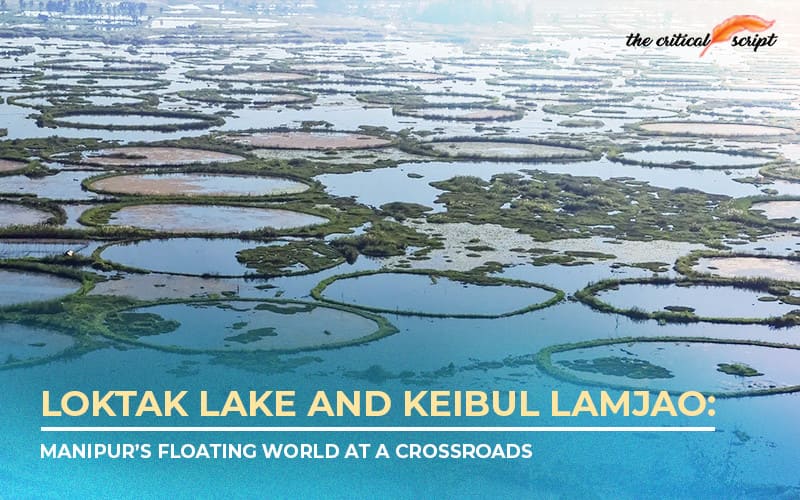
Loktak Lake and Keibul Lamjao: Manipur’s Floating World at a Crossroads
Manipur’s
Loktak Lake and the adjoining Keibul Lamjao National Park form one of the most
remarkable ecological landscapes in the world, yet they stand today at a
delicate turning point. Loktak, the largest freshwater lake in Northeast India,
is a shimmering expanse where land appears to float, shaped by the unique
phumdis - a spongy masses of soil, vegetation and organic matter that drift on
its surface. Keibul Lamjao, resting on the lake’s southern edge, is the only
floating national park on the planet, a living marvel that continues to
fascinate scientists and visitors alike. Together, they represent a rare
combination of natural beauty, cultural heritage and biological significance.
Loktak
is a lake that breathes with the seasons. Recent ecological assessments record
over 230 species of aquatic plants, dozens of waterbird species and a thriving
freshwater fish community, all of which depend on the phumdis that rise and
fall with the rhythms of the lake. These floating islands serve as breeding
grounds, feeding zones and natural filtration systems, while simultaneously
supporting the livelihoods of thousands of fishing families. Floating huts,
traditional canoe routes and age-old fishing enclosures sit lightly on the
lake, shaping a distinctive way of life that has persisted for centuries.
Keibul
Lamjao National Park is equally extraordinary. Spread across about forty square
kilometres, it provides the last wild refuge of the Sangai, the endangered
brow-antlered deer whose slow, graceful movements on the quivering phumdis have
earned it the name “the Dancing Deer.” Once believed extinct in the
mid-twentieth century, the Sangai survived with fewer than fifteen individuals
before conservation efforts slowly revived its population. A recent census
places the number at over 270, a fragile but hopeful recovery that underscores
the urgent need to protect its habitat.
The
cultural importance of this landscape is deep and enduring. For the communities
who live around the lake, Loktak is not merely a waterbody but a foundation of
identity, economy and spiritual belief. Traditional fishing practices, rituals
tied to the lake’s cycles and the craftsmanship of boat-making reflect a
symbiotic relationship between people and nature that is increasingly rare in
modern times.
Yet,
the pressures on this floating world have intensified. The natural rise and
fall of the phumdis has been disrupted by the Loktak Hydroelectric Project,
which maintains consistently high water levels and prevents the phumdis from
absorbing nutrients during the dry season. As a result, they are thinning,
breaking and drifting more than ever before. Pollution from agricultural runoff
and urban waste continues to degrade water quality, while encroachment and
unregulated tourism have altered the lake’s hydrology. Climate change adds
unpredictable stress, with fluctuating rainfall patterns and rising
temperatures threatening the delicate balance of the ecosystem.
Conservation
efforts, though steady, face complex challenges. The Loktak Development
Authority has attempted phumdi restoration, water-flow management and
systematic monitoring using satellite and drone technology. Environmental
groups have worked alongside local communities to promote sustainable fishing
and responsible tourism, while researchers continue to document biodiversity
trends and assess ecological risks. Early signs from recent field studies
indicate that certain aquatic plant species and waterbird populations are
stabilising, suggesting that the lake retains a capacity for recovery if interventions
are timely and coordinated.
Responsible
tourism remains crucial to that future. The lake does not need mass influx; it
needs thoughtful visitors who understand its fragility; those who support local
homestays, respect the floating vegetation, reduce plastic use and observe
wildlife quietly. Loktak’s beauty lies not only in its scenery but in its
subtlety, and it must be experienced with care.
What
is at stake is more than an ecosystem. Loktak and Keibul Lamjao are a living
classroom on ecological resilience and cultural continuity, a Ramsar-recognised
wetland whose uniqueness cannot be replicated elsewhere. The survival of the
Sangai, the traditions of the fisher communities and the integrity of an
irreplaceable ecological system depend on decisions made today. If nurtured
wisely, Loktak will continue to stand as the pride of Manipur - a place where
land floats, deer dance and human life flows in harmony with nature. If
ignored, the world risks losing a landscape found nowhere else on Earth.
The
floating world of Loktak demands attention, respect and protection. Its future
is not merely a regional concern but a national responsibility.
Disclaimer: The opinions expressed in this article are those of the author's. They do not purport to reflect the opinions or views of The Critical Script or its editor.
Regional Related Posts










Newsletter!!!
Subscribe to our weekly Newsletter and stay tuned.
Related Comments