


 INDIA ASIAN GAMES MEDAL MONITOR
·
India: 🥇 0
| 🥈 0
| 🥉 0
| Total: 0
INDIA ASIAN GAMES MEDAL MONITOR
·
India: 🥇 0
| 🥈 0
| 🥉 0
| Total: 0
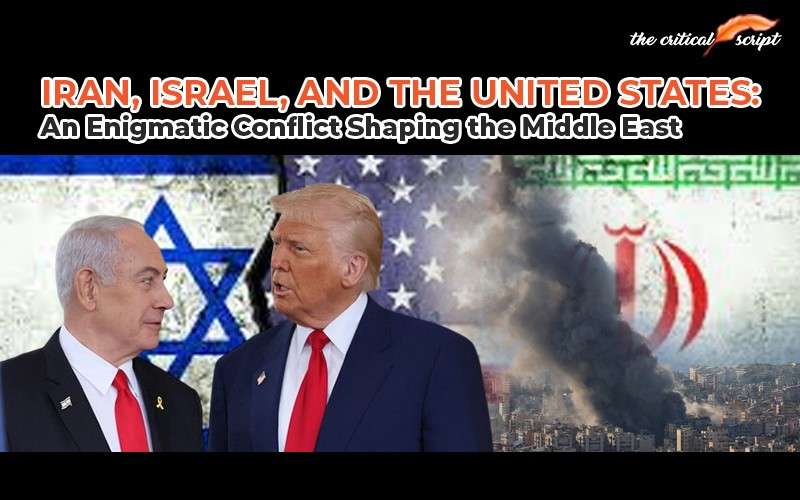
Iran, Israel, and the United States: An Enigmatic Conflict Shaping the Middle East
Origins of a Strategic Rivalry
The geopolitical
confrontation involving Iran, Israel, and the United States
has its roots in one of the most transformative political events of the modern
Middle East - the Iranian Revolution.
Before 1979, Iran
under Shah Mohammad Reza Pahlavi maintained discreet yet significant
cooperation with Israel and enjoyed close strategic relations with the United
States. Iran functioned as a crucial Western ally in the region, and
Israeli–Iranian intelligence collaboration was widely acknowledged. However,
the Islamic Revolution fundamentally altered this alignment.
The new revolutionary leadership
rejected Western political influence and redefined Iran’s foreign policy
through ideological resistance. Israel was portrayed as a symbol of Western
domination in the region, while the United States was viewed as the primary
architect of Middle Eastern power structures that Tehran opposed. The collapse
of relations between Iran and the United States following the hostage crisis in
Tehran entrenched hostility that continues to shape regional geopolitics.
From this moment
onward, the relationship between these three actors became defined by
suspicion, ideological rivalry, and strategic competition.
The Era of Indirect Confrontation
For several decades,
the conflict rarely took the form of open warfare. Instead, it evolved into a
complex pattern of indirect confrontation often described by analysts as a
“shadow war.”
Iran expanded its
regional influence by supporting political and militant movements that opposed
Israeli policies, including the Lebanese organization Hezbollah and the
Palestinian movement Hamas. Through these alliances, Tehran sought to
counterbalance Israel’s military superiority and assert its presence in the
regional political landscape.
Israel, meanwhile,
adopted a strategy focused on limiting Iran’s growing military capabilities. Israeli
intelligence operations targeted Iranian military networks and nuclear
scientists, while Israeli airstrikes frequently struck Iranian-linked
infrastructure across Syria.
The United States
played an influential role in this confrontation by imposing extensive economic
sanctions on Iran and providing military and diplomatic support to Israel.
Washington justified these actions primarily through concerns about Iran’s
nuclear ambitions and regional military influence.
Critics, however, have
argued that this strategy has sometimes contributed to escalating tensions
rather than resolving them. By combining economic pressure with military
support for Israel, the United States has often reinforced Tehran’s perception
that it faces a coordinated effort to weaken or isolate the Islamic Republic.
Escalation Toward Direct Conflict
In the early 2020s,
the delicate balance of indirect confrontation began to erode. Israeli strikes
targeting Iranian military positions across the Middle East intensified, while
Iran accelerated its missile and drone programs. Regional tensions grew
increasingly volatile, and the risk of direct confrontation rose steadily.
The situation reached
a dramatic turning point in early 2026 when large-scale strikes attributed to
Israel and reportedly supported by the United States targeted senior Iranian
leadership and strategic infrastructure in Tehran. During these operations, Ali
Khamenei, who had ruled Iran since 1989, was killed.
The assassination of a
sitting supreme leader represented an extraordinary escalation in modern
international relations. For Iran, the attack was not merely a military strike
but a direct challenge to the sovereignty and continuity of its political
system.
While Israeli
officials framed the operation as a necessary step to weaken Iran’s strategic
capabilities, critics around the world questioned whether the assassination of
a head of state risked crossing a dangerous threshold in international
conflict. Some analysts warned that such actions could normalize the targeting
of national leaders, potentially destabilizing global norms governing warfare.
In the aftermath of
the attack, Iran’s political establishment moved quickly to consolidate
authority. The clerical leadership appointed Mojtaba Khamenei as the new
supreme leader, signaling institutional continuity while projecting defiance
toward external pressure.
Iran’s Retaliation
Iran responded to the
assassination with a combination of military and geopolitical retaliation.
Missile and drone strikes targeted Israeli facilities as well as American
military installations across the Middle East. These attacks demonstrated that
despite the loss of its supreme leader, Iran retained the capability to respond
forcefully.
The conflict quickly
expanded beyond direct exchanges between Iran and Israel. Iranian-aligned
groups across Lebanon, Iraq, and Syria intensified their operations, creating a
multi-front confrontation that threatened to draw several regional actors into
the conflict.
Beyond the
battlefield, the crisis also affected global economic stability. Rising
tensions in the Persian Gulf created concerns about the security of major
energy routes, particularly the Strait of Hormuz, through which a significant
portion of global oil supplies transit. Markets reacted sharply to the
possibility that military escalation could disrupt energy flows.
Strategic Calculations and Criticism
Each actor in the
conflict pursues strategic objectives shaped by its perception of security and
regional influence.
Israel views Iran’s
missile programs, nuclear ambitions, and regional alliances as the most
significant threat to its long-term security. From the Israeli perspective,
weakening Iran’s military infrastructure and limiting its strategic reach are
necessary steps to ensure national survival.
Iran, however, frames
its actions as defensive. Tehran argues that its missile capabilities and
regional alliances provide essential deterrence against what it perceives as
coordinated pressure from Israel and the United States.
The United States
occupies a central position in this triangular conflict. Washington’s strong
alliance with Israel and its efforts to contain Iran have made it a direct
participant in the strategic rivalry. Supporters of American policy argue that
U.S. involvement is necessary to maintain stability and prevent nuclear
proliferation.
Yet critics contend
that American support for Israeli military operations and the long-standing
reliance on sanctions have often deepened regional polarization. Rather than
encouraging diplomatic engagement, these policies may have reinforced cycles of
confrontation that make de-escalation more difficult.
The Uncertain Future
The assassination of
Iran’s supreme leader has introduced a new and unpredictable phase in Middle
Eastern geopolitics. While the immediate retaliation from Iran demonstrated its
willingness to confront its adversaries, the longer-term trajectory of the
conflict remains uncertain.
Some analysts believe
the confrontation could evolve into a prolonged regional war involving multiple
Middle Eastern actors. Others suggest that both sides may ultimately seek to
avoid uncontrolled escalation, continuing instead with limited strikes designed
to signal strength while preventing full-scale conflict.
There is also the possibility
that international diplomatic pressure could eventually push the parties toward
some form of de-escalation. However, the ideological and strategic divisions
that define the rivalry remain deeply entrenched.
The conflict involving
Iran, Israel, and the United States illustrates the complexities of modern
geopolitical rivalry. What began as an ideological confrontation following the
Iranian Revolution has evolved into a multifaceted struggle involving military
power, regional alliances, and global economic interests.
The killing of Iran’s
supreme leader represents a turning point that may reshape the political
dynamics of the Middle East for years to come. At the same time, it raises
broader questions about the limits of military power and the consequences of
escalation in a region already marked by decades of conflict.
Whether the future
brings wider war, prolonged strategic stalemate, or renewed diplomatic
engagement will depend not only on the actions of the principal actors but also
on the willingness of the international community to pursue paths that move
beyond cycles of retaliation.
Disclaimer: The opinions expressed in this article are those of the author's. They do not purport to reflect the opinions or views of The Critical Script or its editor.
World Related Posts











Newsletter!!!
Subscribe to our weekly Newsletter and stay tuned.
Related Comments