


 INDIA ASIAN GAMES MEDAL MONITOR
·
India: 🥇 0
| 🥈 0
| 🥉 0
| Total: 0
INDIA ASIAN GAMES MEDAL MONITOR
·
India: 🥇 0
| 🥈 0
| 🥉 0
| Total: 0
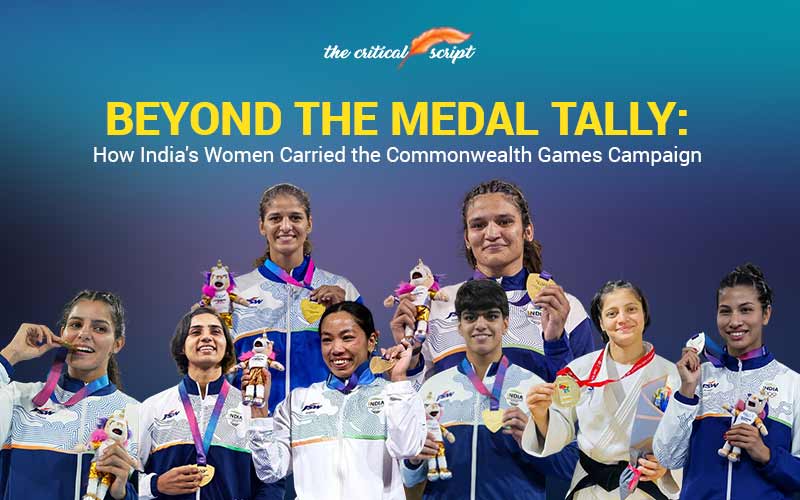
Beyond the Medal Tally: How India's Women Carried the Commonwealth Games Campaign
When
India concluded its campaign at the 2026 Commonwealth Games with 39 medals - 13
gold, 17 silver and 9 bronze - the headlines celebrated a fourth-place finish.
But the numbers reveal a more significant story: women were the backbone of
India's success.
Of
India's 13 gold medals, eight were won by women. They also contributed four
silver and four bronze medals, making them the single biggest force behind
India's medal haul. In a Games where several of India's traditionally dominant
sports, including wrestling, shooting, badminton, hockey and cricket, were
absent from the programme, it was Indian women who ensured the tricolour
continued to rise.
The
campaign began familiarly with Mirabai Chanu, whose gold in weightlifting opened
India's account. It was yet another reminder of the consistency that has made
her one of India's greatest sporting icons.
But
the defining story came from the boxing ring.
India
won a record haul in boxing, and women stood at the heart of that dominance.
Preeti Pawar, Jaismine Lamboria, Sakshi Chaudhary, Priya Ghanghas and Arundhati Choudhary each captured gold, showcasing
a remarkable depth of talent across weight categories. Alongside them, Asmita Dey
delivered another gold in judo, proving that India's rise is no longer confined
to a handful of disciplines.
These
victories were not isolated achievements. They are the outcome of years of
investment in grassroots sports, improved coaching, scientific training and
increasing opportunities for women athletes. More importantly, they reflect a
changing social landscape where young girls from villages, small towns and
modest backgrounds are competing, and winning on the international stage.
Yet,
the celebration should also invite introspection.
India
continues to applaud women athletes when they return with medals, but many
still struggle with inadequate infrastructure, inconsistent financial support
and limited media attention compared to their male counterparts. Their success
often depends more on personal resilience than on a robust sporting ecosystem.
The
2026 Commonwealth Games should therefore not merely be remembered for India's
medal tally. They should be remembered as a reminder that the country's sporting
future increasingly rests on the shoulders of its women. They have repeatedly
delivered on the biggest stages from the Olympics to the Commonwealth Games and
have become India's most dependable performers.
The
challenge now lies with policymakers, sports federations and society at large.
If women can account for the majority of India's gold medals despite persistent
structural barriers, imagine what they could achieve with equal access,
sustained investment and institutional support.
The
medals from Glasgow are more than podium finishes. They are evidence that the
face of Indian sport is changing and that change is being led by women.
Disclaimer: The opinions expressed in this article are those of the author's. They do not purport to reflect the opinions or views of The Critical Script or its editor.
Sports Related Posts







Newsletter!!!
Subscribe to our weekly Newsletter and stay tuned.
Related Comments