


 INDIA ASIAN GAMES MEDAL MONITOR
·
India: 🥇 0
| 🥈 0
| 🥉 0
| Total: 0
INDIA ASIAN GAMES MEDAL MONITOR
·
India: 🥇 0
| 🥈 0
| 🥉 0
| Total: 0
1994-2008 Part 1
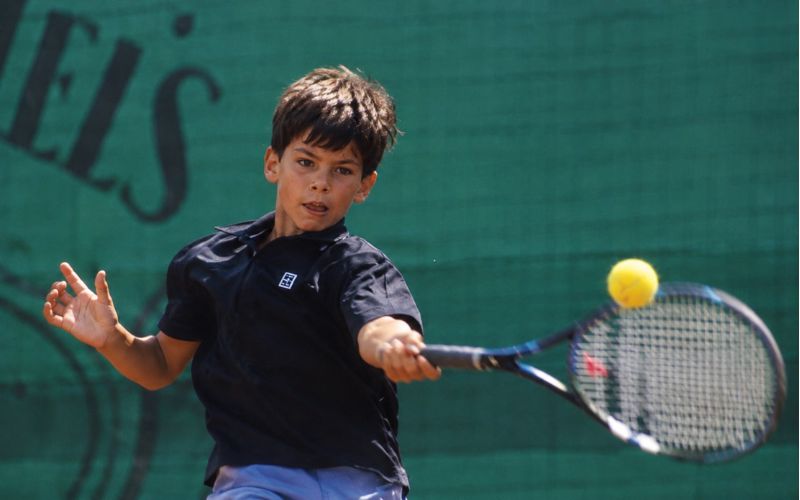
In 1994, somewhere on the tennis courts of Mallorca, Spain, a seven-year-old boy was struggling against an opponent four years older than him. His name was Rafael Nadal.
The young Nadal was tense. The match was not going the way he wanted, and the pressure was getting to him. Sitting nearby was his uncle and coach, Toni Nadal, the man who would go on to play one of the most influential roles in shaping his career.
In the middle of his struggle, the young Rafael turned to Toni and prayed for rain. In a child's mind, his uncle seemed to possess almost magical powers. If Toni could make the rain come, perhaps the match would stop, the pressure would disappear, and the boy could escape a situation he was finding difficult.
But the match continued.
Gradually, Nadal began to settle. His confidence returned, his game improved, and he started fighting his way back into the contest. The boy who had been struggling moments earlier was beginning to discover his resolve.
Then, suddenly, it rained.
For young Rafael, it must have felt like a wish coming true. He turned to Toni again, this time asking him to stop the rain.
It is a charming story of childhood, vulnerability and the extraordinary place a trusted adult occupies in a young mind. Whether remembered as an anecdote or a symbol of their relationship, it offers a glimpse into the world of a boy who would eventually become one of tennis's greatest competitors.
Nearly fourteen years later, rain would interrupt another match involving Nadal and place him in a very different kind of predicament.
2008: Another Rain Delay, Another Battle
By the summer of 2008, Nadal was no longer the uncertain seven-year-old on a local court. He had established himself as one of the world's leading tennis players, dominating the clay courts of Roland-Garros and repeatedly challenging Roger Federer, the reigning king of grass-court tennis.
Yet Wimbledon remained unfinished business.
Nadal had reached the final in both 2006 and 2007, losing to Federer on each occasion. The 2007 final, in particular, had been an intense five-set contest in which Federer survived Nadal's challenge to claim his fifth consecutive Wimbledon title.
In 2008, Nadal returned to the All England Club with another opportunity to break through.
The final on July 6 brought the two rivals together once more. Nadal won the first two sets, putting himself in a commanding position. Federer, however, refused to surrender. He took the third and fourth sets, dragging the match into a decisive fifth set.
The contest had become a battle of endurance, concentration and nerve. Every point carried enormous weight. Neither player was willing to give the other an inch.
And then came the rain.
Play was interrupted as the fading daylight added another layer of uncertainty to an already extraordinary match. For spectators, the delay meant waiting. For the players, it meant stepping away from a contest in which momentum could be everything.
One cannot know whether the childhood memory of Mallorca crossed Nadal's mind at that precise moment. But the parallel is striking: the boy who once wished for rain to interrupt a difficult match had grown into a champion whose greatest test was being interrupted by the very same force.
The difference was everything.
In Mallorca, rain had seemed like an escape from pressure. At Wimbledon, there was nowhere Nadal wanted to escape to. He was on the verge of achieving something he had pursued for years, and he would have to return to the court and finish the job.
The Boy and the Champion
When play resumed, Nadal and Federer continued their remarkable duel. The Spaniard eventually won the fifth set 9–7, claiming his first Wimbledon championship after four hours and forty-eight minutes of play.
The victory ended Federer's five-year reign at Wimbledon and gave Nadal his first major title outside the French Open. It also completed one of the most celebrated matches in the history of tennis.
There is something fascinating about placing these two moments side by side: a little boy looking to his uncle for a way out of a difficult match, and a young man standing on Centre Court, facing one of the greatest challenges of his career.
Between those moments lay years of training, defeats, discipline and an evolving relationship between player and coach.
Perhaps the rain was merely a coincidence in both stories. Perhaps the connection exists because human beings naturally look for patterns in the events that shape our lives.
But the image remains compelling: a seven-year-old Rafael Nadal, hoping the rain would save him, and the 22-year-old Nadal, returning to the court after the rain to claim a place in tennis history.
to be continued…
Disclaimer: The opinions expressed in this article are those of the author's. They do not purport to reflect the opinions or views of The Critical Script or its editor.
Sports Related Posts












Newsletter!!!
Subscribe to our weekly Newsletter and stay tuned.
Related Comments