


 INDIA ASIAN GAMES MEDAL MONITOR
·
India: 🥇 0
| 🥈 0
| 🥉 0
| Total: 0
INDIA ASIAN GAMES MEDAL MONITOR
·
India: 🥇 0
| 🥈 0
| 🥉 0
| Total: 0
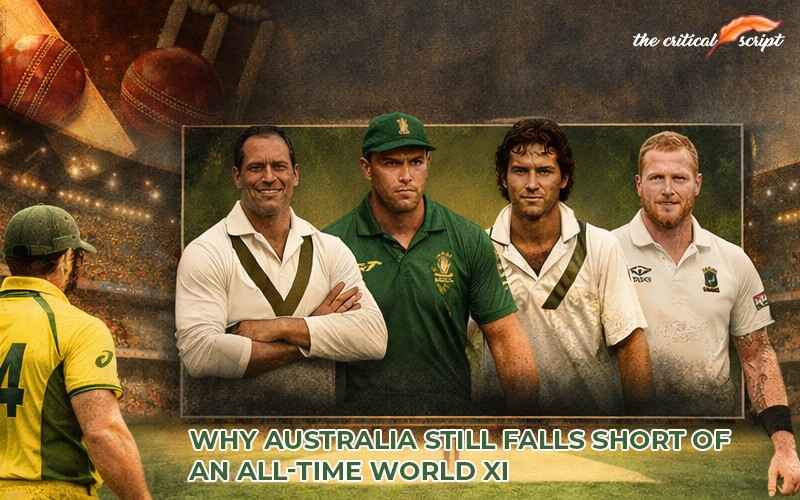
Why Australia Still Falls Short of an All-Time World XI
As the T20 World Cup in India highlights the importance of adaptability and balance
in modern cricket, it reinforces a timeless truth of the game. In conditions
where matches turn quickly and versatility becomes decisive, players who
contribute across disciplines gain unmatched value, an insight that sharpens
the debate around what truly defines an All-Time World XI.
The All-Rounder Gap That Defines Cricketing Balance
Australia’s
place in cricket history is secure. No nation has dominated the sport across
formats and eras with the same consistency, ruthlessness, and depth. From
invincible teams to record-breaking champions, Australian cricket has long set
the global benchmark.
Yet
when selectors, historians, and analysts attempt to construct an All-Time
World XI, a theoretical team designed to win anywhere, against anyone, in
any era - Australia invariably falls short of total representation.
The
reason is neither sentimental nor statistical. It is structural.
Australia
has never produced a truly indispensable, world-class all-rounder.
Why an All-Rounder Is Non-Negotiable in a World XI
An
All-Time World XI is not an exercise in national pride or era dominance. It is
an attempt to assemble the most complete and adaptable team possible, capable
of surviving unfamiliar conditions, pressure scenarios, and tactical
uncertainty.
At
the heart of such a team lies a genuine all-rounder, one who can:
● Bat in the top six against elite
bowling
● Operate as a frontline bowler in any
conditions
● Change matches through either
discipline independently
This
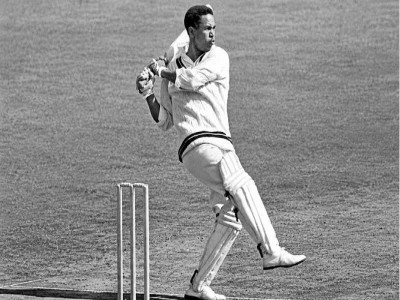
is why figures such as Garfield Sobers, Jacques Kallis, Imran
Khan, Kapil Dev, and Ian Botham are automatic selections.
They are not included for balance, they define it.
Australia’s Specialist Model: A Double-Edged Sword
Australian
cricket has historically thrived on specialisation. Its success has been built
on uncompromising roles:
● Batters selected solely to dominate
● Fast bowlers are conditioned to
attack relentlessly
● Clear hierarchies with minimal
overlap of responsibility
This
system produced icons such as Don Bradman, Shane Warne, and Glenn
McGrath, specialists of historic magnitude.
However,
this same philosophy discouraged the cultivation of a cricketer who could
dominate in two disciplines at the highest level. Australia did not require an
all-rounder to win, and therefore never structurally invested in developing one
for the long term.
The Illusion of Australian All-Rounders
Australia
has fielded several players often described as all-rounders, yet none meet the
uncompromising standard demanded by a World XI.
● Keith Miller remains a romantic figure of the
post-war era, but his impact does not compare with the era-defining dominance
of Sobers or Imran Khan.
● Steve Waugh contributed usefully with the ball,
but his selection is rooted in batting excellence and leadership, not all-round
supremacy.
● Shane Watson excelled in limited-overs cricket
but never established himself as a Test-level all-time great.
Australia
produced cricketers who could contribute in two disciplines, but not one
who could command both.
Why This Absence Is Decisive
In
an All-Time World XI, compromises are fatal. There is no room for:
● Part-time bowlers
● Lower-order batters posing as
all-rounders
● Specialists protected by team
composition
Without
a genuine all-rounder, Australia must sacrifice either batting depth or bowling
balance. Other cricketing nations resolve this dilemma with a single player who
performs both roles at an elite level.
Australia
never had that solution.
Dominance Versus Completeness
The
irony is that Australia’s greatest teams never needed an all-rounder. Their
supremacy allowed them to overwhelm opponents through depth, discipline, and
relentless execution.
But
an All-Time World XI is designed not for dominance, but for survival under
uncertainty, when conditions are hostile, plans collapse, and individual
brilliance becomes decisive.
In
such moments, Australia’s historical model offers excellence, but not
completeness.
Australia
remains cricket’s most successful nation, defined by its champions, culture,
and winning instinct. Yet in the ultimate theoretical exercise, constructing an
All-Time World XI, it falls short for a singular reason.
Without
a Sobers, a Kallis, Ben Stokes or an Imran, Australia cannot achieve perfect
balance.
And
in cricket’s most demanding selection, balance is the final measure of
greatness.
Disclaimer: The opinions expressed in this article are those of the author's. They do not purport to reflect the opinions or views of The Critical Script or its editor.
Sports Related Posts












Newsletter!!!
Subscribe to our weekly Newsletter and stay tuned.
Related Comments