


 INDIA ASIAN GAMES MEDAL MONITOR
·
India: 🥇 0
| 🥈 0
| 🥉 0
| Total: 0
INDIA ASIAN GAMES MEDAL MONITOR
·
India: 🥇 0
| 🥈 0
| 🥉 0
| Total: 0
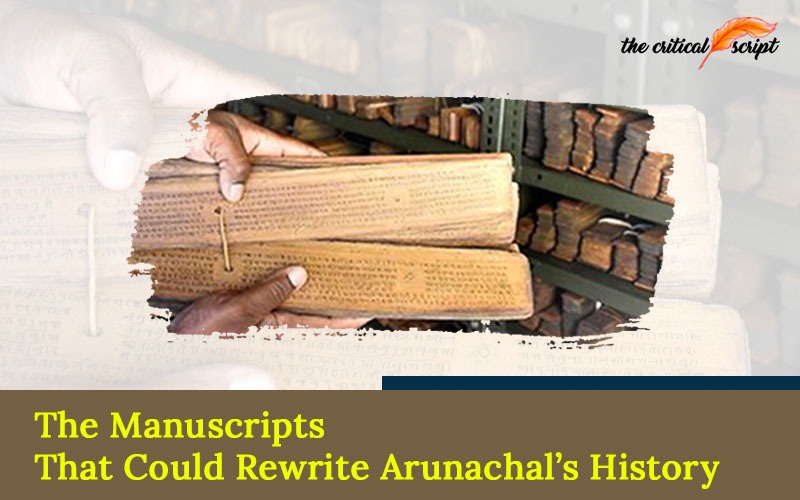
The Manuscripts That Could Rewrite Arunachal’s History
Inside
the Tai Khamti effort to preserve a written world of history, medicine, law,
literature and memory
For centuries, history in Arunachal Pradesh has lived in more
than monuments and official records.
It has lived in monasteries, in oral traditions passed from one
generation to another, in customary laws, in chants and stories—and in fragile
manuscripts written in scripts that remain unfamiliar to most of the outside
world.
Among the communities preserving such a written legacy are the Tai
Khamti, whose manuscripts offer a rare window into the intellectual and
cultural life of one of Arunachal Pradesh's indigenous communities.
Now, that legacy is entering a new chapter: the digital age.
In August 2026, Deputy Chief Minister Chowna Mein
launched the first Tai Khamti Heritage Archive website in Namsai and released Lik
Loka Ping-Nyep. The digitisation project has so far preserved 471 rare
manuscripts comprising 28,264 pages.
The number is impressive. But the significance lies in what
those pages contain.
A library hidden in plain sight
The Tai Khamti manuscript tradition encompasses subjects far
beyond religious texts.
According to accounts surrounding the archive initiative, the
manuscripts contain material relating to Buddhist philosophy, history,
folklore, traditional medicine, customary law, language, literature and
indigenous knowledge systems.
In other words, these are not simply old books.
They are records of how a community understood its world.
A manuscript about customary law can reveal how disputes were
settled. A text on traditional medicine can preserve knowledge of plants and
healing practices. A historical chronicle can provide perspectives on
migration, political organisation and encounters with neighbouring communities.
A literary text can reveal how language evolved.
And a religious manuscript can tell us not only what people
believed, but how those beliefs shaped education, art, architecture and
everyday life.
That makes the collection valuable not only to the Tai Khamti
community, but potentially to historians, linguists, anthropologists,
researchers and students studying the wider history of the Eastern Himalaya.
The script is part of the story
The manuscripts cannot be separated from the writing system that
carries them.
The Tai Khamti have their own traditional script, commonly
referred to as Lik Tai or Lik-Tai. Linguistic research describes
the Khamti writing tradition as part of the wider family of Tai scripts, while
noting distinctive features in its forms and tone marking.
The script remains part of contemporary cultural life as well.
Tai language primers have been developed and used in educational
settings in Namsai, while the script continues to appear in religious and cultural
contexts.
This matters because a language can survive orally while its
written heritage slowly becomes inaccessible.
When fewer people can read the old texts, manuscripts can become
objects to be preserved rather than knowledge that can actually be used.
Digitisation alone cannot solve that problem.
But it can create the foundation for the next step: reading,
cataloguing, translating and teaching the material.
From palm-leaf and paper to pixels
There is an irony at the heart of the project.
Some of the community's oldest knowledge is now being protected
by some of its newest technology.
In September, a specialised manuscript scanning machine was
handed over to the Arunachal Pali Vidyapeeth at Chongkham under the
Government of India's Gyan Bharatam Mission, with the aim of digitising
and preserving rare manuscripts and traditional knowledge.
Mein described the initiative as part of a larger effort to
ensure that Arunachal's literary, cultural and traditional knowledge survives
for future generations.
The shift is important.
A physical manuscript can be damaged by humidity, insects, fire,
age or simple handling. A digital copy cannot replace the original, but it can
provide another layer of protection and make the material available to a much
wider community.
More importantly, digitisation can transform a collection from
something that sits on a shelf into something that can eventually be searched,
studied, catalogued and translated.
That possibility is already being discussed around the Tai
Khamti archive.
Disclaimer: The opinions expressed in this article are those of the author's. They do not purport to reflect the opinions or views of The Critical Script or its editor.
Regional Related Posts







Newsletter!!!
Subscribe to our weekly Newsletter and stay tuned.
Related Comments