


 INDIA ASIAN GAMES MEDAL MONITOR
·
India: 🥇 0
| 🥈 0
| 🥉 0
| Total: 0
INDIA ASIAN GAMES MEDAL MONITOR
·
India: 🥇 0
| 🥈 0
| 🥉 0
| Total: 0
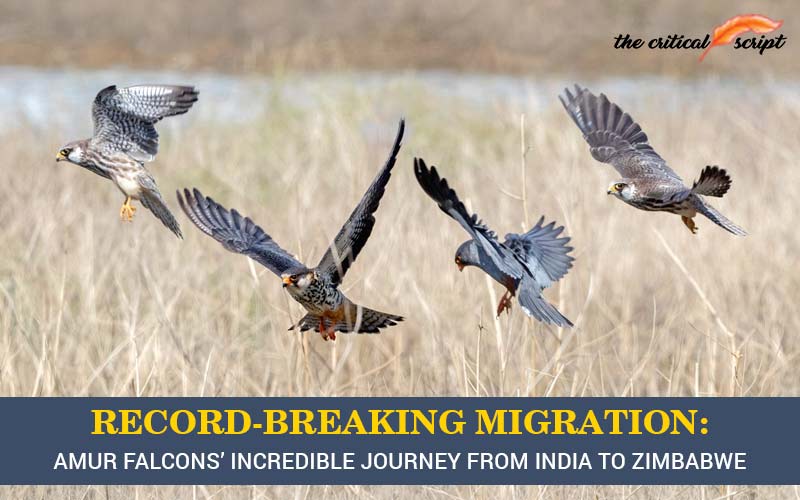
Record-Breaking Migration: Amur Falcons’ Incredible Journey from India to Zimbabwe
In one of the most remarkable natural feats documented this year, three Amur falcons completed a record-breaking migration of approximately 5,000 km from India to Zimbabwe in just five to six days, stunning scientists, birders, and conservationists around the world.
The Tiny Yet Mighty Travellers
The Amur falcon (Falco amurensis)
is a small raptor that breeds in south-eastern Siberia and northern China
before undertaking an extraordinary annual migration to wintering grounds in
southern and eastern Africa. This journey involves traversing multiple
continents, oceans, and climatic zones — a true testament to endurance in the
natural world.
A Migration Like No Other
In November 2025, three
solar-powered satellite-tagged Amur falcons, named Apapang, Alang,
and Ahu were tracked making an astonishing long-distance flight from
India to southern Africa. The satellite tagging of the Amur falcons was
carried out as part of a structured scientific effort involving the Wildlife
Institute of India (WII) and the Tamenglong Forest Division of Manipuat
the Chiuluan roosting site in Tamenglong district on 11 November 2025.
They flew nearly 5,000 km nonstop,
crossing the Indian subcontinent, the Arabian Sea, and East Africa en route to Zimbabwe.
The entire journey was completed in just five to six days, shedding new
light on the species’ migratory endurance and navigation capabilities.
Scientists say this migration is
among the longest nonstop flights recorded for a small raptor, challenging
previous assumptions about how birds conserve energy and navigate across vast
distances.
What This Means for Science
The use of satellite tags has
provided rare insights into not only the path these birds take but also how
they manage energy and survival during such grueling expeditions. Biologists
studying the data observed that each falcon employed distinct strategies,
indicating adaptability and variation within migratory behaviour.
Global Ecosystems and Conservation
The Amur falcon’s migration
underlines the remarkable interconnectedness of global ecosystems. These
birds link diverse habitats across Asia and Africa, making them important
indicators of environmental health. Their journey highlights the need for international
cooperation in conserving migratory flyways, which are vital not just for
falcons but for countless other migratory species that depend on a chain of
habitats across borders.
Community awareness and conservation
efforts, especially at key stopover sites like northeastern India, have been
crucial in protecting these raptors and celebrating their incredible annual
passages.
Disclaimer: The opinions expressed in this article are those of the author's. They do not purport to reflect the opinions or views of The Critical Script or its editor.
National Related Posts













Newsletter!!!
Subscribe to our weekly Newsletter and stay tuned.
Related Comments