


 INDIA ASIAN GAMES MEDAL MONITOR
·
India: 🥇 0
| 🥈 0
| 🥉 0
| Total: 0
INDIA ASIAN GAMES MEDAL MONITOR
·
India: 🥇 0
| 🥈 0
| 🥉 0
| Total: 0
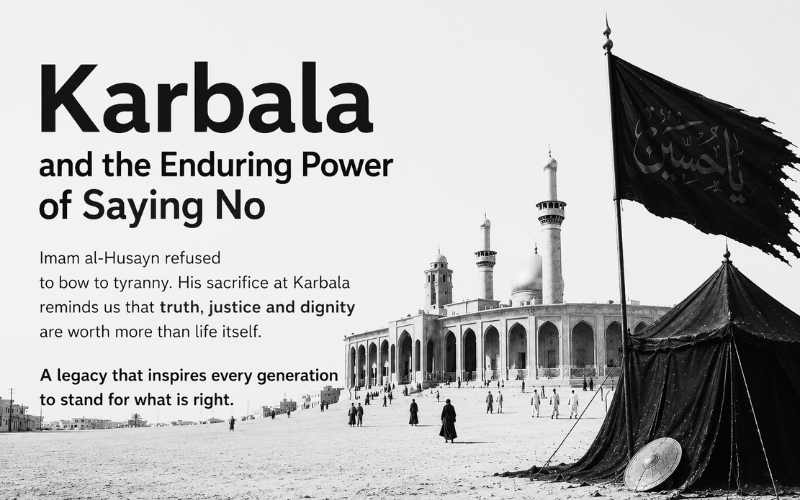
Karbala and the Enduring Power of Saying No
Most battles are remembered for who won. Karbala is remembered because of those who refused to surrender.
More than thirteen centuries have passed since a small caravan halted on the desolate plains of Karbala, in present-day Iraq. It stood no chance against the army that surrounded it. There were no reinforcements to await, no strategy that could reverse the odds, and no illusion that survival was possible. Yet history continues to remember this encounter not as the triumph of an empire, but as the triumph of conscience.
At the centre of that defining moment stood Imam al-Husayn, the grandson of the Prophet Muhammad (peace be upon him). His struggle was not a contest for political power or territorial control. It was a refusal to grant moral legitimacy to tyranny.
The Umayyad ruler, Yazid, demanded Imam al-Husayn's allegiance. Such a pledge would have signalled that oppression, corruption and the erosion of Islamic values could coexist with religious authority. Imam al-Husayn's answer was a simple but resolute "no" - a response that would cost him everything, yet preserve principles from which generations would continue to draw strength.
His journey to Karbala was accompanied not by an army but by his family and a small group of loyal companions, including women and children. There, they were encircled by a force traditionally reported to number around thirty thousand. For three days, they were denied access to water beneath the relentless desert sun. On the tenth day of Muharram, known as Ashura, one companion after another fell in battle. Brothers, sons, nephews and friends embraced martyrdom. Even Imam al-Husayn's six-month-old son was killed while in his father's arms. Finally, he stood alone.
Historical narratives recount that he faced the overwhelming assault with unwavering resolve. Spears pierced his body, arrows darkened the sky, swords struck relentlessly, and stones were hurled at him. Yet he never retreated. Tradition holds that the wounds on his blessed body were all borne from the front, a testament to the fact that he never turned his back on his adversaries. Even in his final moments, he lowered himself into prostration before Allah, embodying complete faith amidst unimaginable suffering.
The brutality did not end with his martyrdom. The bodies of Imam al-Husayn and his companions were left unburied and trampled beneath horses. The surviving women and children were taken captive, their tents looted and burned, before being marched through Kufa and Damascus. Yet it was in captivity that Karbala's message transcended the battlefield. Through the courage and eloquence of Sayyida Zaynab and the surviving members of the Prophet's household, the truth outlived the empire that sought to bury it.
That is why Karbala continues to resonate far beyond the boundaries of time, geography or even faith. Its enduring relevance lies in a question every generation must confront: What happens when silence becomes easier than resistance? Imam al-Husayn demonstrated that there are moments when refusing to legitimise injustice is itself the highest form of leadership.
Empires have risen and vanished since the sands of Karbala were stained with blood. Thrones have collapsed, dynasties have faded, and rulers once feared have become little more than names in history books. Yet every year, millions across the world remember one man who stood with only seventy-two companions against overwhelming odds. They remember him not because he conquered a kingdom, but because he proved that the courage to say "no" can echo louder than the power to command "yes."
Disclaimer: The opinions expressed in this article are those of the author's. They do not purport to reflect the opinions or views of The Critical Script or its editor.
History And Facts Related Posts







Newsletter!!!
Subscribe to our weekly Newsletter and stay tuned.
Related Comments