


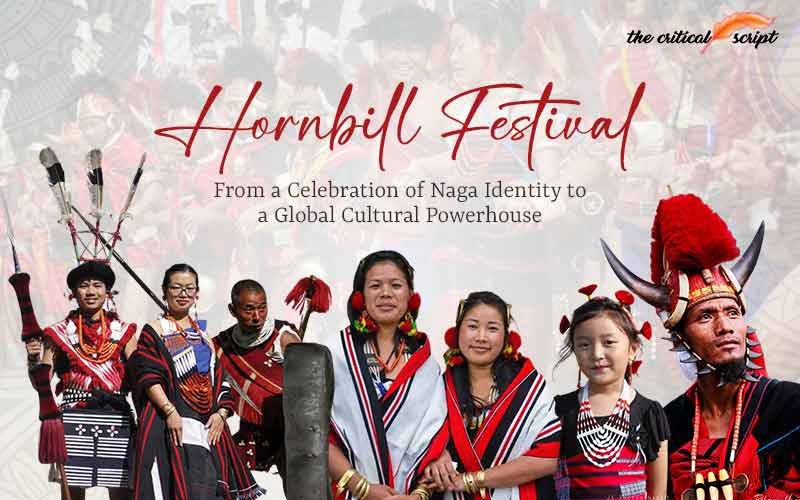
Hornbill Festival: From a Celebration of Naga Identity to a Global Cultural Powerhouse
From its
modest beginnings in 2000 to welcoming international dignitaries, celebrated
artists and thousands of visitors, Nagaland's Hornbill Festival has emerged as
a powerful platform for cultural preservation, tourism, entrepreneurship and
global engagement.
Every
December, the hills of Nagaland become a spectacular celebration of colour,
music, tradition and community. The rhythmic beats of traditional drums, the
vibrant attire of Naga tribes, indigenous sporting events and the aroma of
traditional cuisine transform the Naga Heritage Village at Kisama into a
meeting ground for cultures from across the world.
Known as the
'Festival of Festivals', the Hornbill Festival is today one of India's most
recognised cultural tourism events. Yet, its journey began with a much deeper
purpose: bringing Nagaland's diverse tribal communities together and ensuring
that their rich cultural heritage finds a place in an increasingly modern
world.
The beginnings: An idea to preserve
and celebrate identity
The Hornbill
Festival was conceptualised by the Government of Nagaland in 2000 to showcase
the state's diverse cultural traditions, strengthen unity among its tribes and
promote tourism.
Nagaland's
cultural identity is shaped by its numerous tribes, each with distinctive
customs, traditional attire, languages, music, festivals and community
practices. However, much of this heritage was traditionally celebrated within
individual villages and communities.
The festival
sought to bring these traditions together on a common platform, allowing
communities to celebrate their shared identity while preserving their
individual cultural expressions.
The first
edition was held in December 2000 at the Kohima Local Ground. As interest grew,
the festival expanded and eventually found its permanent home at the Naga
Heritage Village, Kisama, in 2003.
Located
approximately 12 kilometres from Kohima, Kisama was developed as a cultural
space reflecting traditional Naga village architecture. Its tribal morungs,
performance arenas and exhibition spaces provided a setting where visitors
could experience the cultural life of Nagaland beyond conventional tourism.
Kisama: Where 17 tribes come
together
The defining
strength of Hornbill lies in its representation of Nagaland's diverse tribal
communities.
The
traditional morungs, each reflecting the architectural and cultural
characteristics of different tribes, form an important part of the festival
experience. Traditional dances, folk music, indigenous games, textile
exhibitions, handicrafts and culinary showcases offer visitors a glimpse into
the state's living heritage.
From the
warrior traditions and folk performances to indigenous food practices and
craftsmanship, every element contributes to a larger narrative of cultural
continuity.
The festival
has also evolved to embrace contemporary expressions through music concerts,
rock performances, art exhibitions and adventure tourism activities. This
combination of traditional and modern experiences has helped Hornbill connect
with younger generations while retaining its cultural foundation.
Landmark moments that elevated
Hornbill's stature
Over the
years, the festival has attracted prominent national and international personalities,
adding to its visibility and expanding its reach.
The festival
has hosted high-level national dignitaries, including the President and Prime
Minister of India, along with Union Ministers, foreign diplomats, cultural
personalities and international delegations.
Some
landmark moments stand out in its journey.
The 2024
Silver Jubilee: 25 years of cultural celebration
The 25th
edition in December 2024 marked a defining milestone in the festival's history.
The silver
jubilee celebrations were inaugurated at Kisama by Nagaland Governor La
Ganesan, in the presence of Chief Minister Neiphiu Rio, Deputy Chief Ministers
TR Zeliang and Y Patton, Tourism Minister Temjen Imna Along and several
distinguished international guests.
Among the
notable attendees were Oscar- and Grammy-winning composer A.R. Rahman, Japanese
Ambassador Keiichi Ono, British High Commissioner Lindy Cameron and Peruvian
Ambassador Javier Manuel Paulinich Velarde.
The
participation of international representatives from the United States, United
Kingdom, Japan and Peru, alongside partner states Sikkim and Telangana, added
an international dimension to the celebrations.
A
particularly significant highlight was the inauguration of the Centre of
Excellence for Music and Arts (CEMA) in Kohima by Chief Minister Neiphiu Rio
and A.R. Rahman. The initiative underlined the growing importance of music and
creative industries in Nagaland's cultural and economic landscape.
Another
major attraction was the traditional Stone Pulling Ceremony held on December 4,
2024, from Kigwema to Kisama. Union Minister for Culture and Tourism Gajendra
Singh Shekhawat attended as Chief Guest, joining Chief Minister Neiphiu Rio and
other dignitaries in witnessing this traditional display of collective strength
and community participation.
The silver
jubilee edition was also notable for its visitor turnout. The opening day alone
recorded 23,910 visitors, including domestic and international tourists.
2025: A
stronger international footprint
The 26th
edition, held from December 1 to 10, 2025, further strengthened Hornbill's
international character.
The festival
welcomed six country partners – Austria, Malta, France, Ireland, the United
Kingdom and Switzerland – with Arunachal Pradesh participating as the partner
state.
The
inaugural ceremony was attended by Nagaland Governor Ajay Kumar Bhalla, Chief
Minister Neiphiu Rio and Tourism Minister Temjen Imna Along.
International
dignitaries included Irish Ambassador Kevin Kelly, Swiss Ambassador Maya
Tissafi and French Ambassador Thierry Mathou, alongside representatives of the
other partner countries.
Their
participation went beyond ceremonial appearances. The international
partnerships opened avenues for discussions on education, tourism, trade,
music, creative industries and people-to-people exchanges.
A special performance titled 'Hornbill Dream', presented by the Task Force for Music and Arts (TaFMA), brought together cultural and musical expressions, reflecting the festival's evolving creative identity.
The 2025
edition also marked an important expansion of the festival beyond Kisama, with
activities extended to six districts. The Konyak Heritage Centre in Mon emerged
as an important additional venue, taking the festival's cultural and tourism
experience closer to more communities.
International
roundtables, networking summits and investment and business meetings introduced
further opportunities for partnerships and economic engagement.
From cultural showcase to an
economic engine
Hornbill's
significance extends well beyond its cultural attractions. It has increasingly
become an important contributor to Nagaland's tourism and local economy.
The influx
of visitors creates business opportunities for hotels, homestays, restaurants,
transport operators, artisans, performers and local entrepreneurs.
According to
an economic assessment cited in a 2024 report, the 2023 edition generated an
estimated ₹131 crore in economic activity, highlighting the festival's growing
role in the state's tourism economy.
Its impact
is particularly visible in the promotion of indigenous products. Traditional
textiles, handicrafts, locally produced goods and Naga cuisine receive a wider
market and greater visibility through the festival.
The event
also creates opportunities for young musicians, artists and performers to
engage with national and international audiences. Through platforms such as
TaFMA, Nagaland is steadily strengthening its creative ecosystem and
encouraging young talent to explore opportunities in the music and entertainment
industries.
In this way,
Hornbill demonstrates how cultural heritage can become a catalyst for
entrepreneurship, employment and community-led economic development.
2026 and beyond: Taking the Hornbill
legacy forward
As Nagaland
prepares for the 27th edition of the Hornbill Festival, scheduled from December
1 to 10, 2026, the focus remains on expanding its cultural, tourism and
international dimensions.
The
opportunity ahead lies in building on the festival's growing global recognition
while ensuring that its benefits reach communities across the state.
Strengthening
tourism infrastructure, expanding market access for indigenous products,
encouraging responsible tourism, supporting local entrepreneurs and creating
more opportunities for young artists can further enhance its contribution to
Nagaland's development.
Equally
important is preserving the authenticity of the traditions that make Hornbill
distinctive. The festival's greatest strength remains the participation of its
tribal communities and the generations that continue to carry their cultural
knowledge forward.
More than a festival, a global
expression of Naga identity
From a
cultural initiative in 2000 to an internationally recognised celebration at
Kisama, the Hornbill Festival has travelled a remarkable distance.
It has
brought together traditional communities, welcomed international dignitaries,
provided a platform for celebrated artists, created opportunities for local
businesses and introduced Nagaland's cultural richness to audiences across the
world.
Its journey
offers a compelling example of how cultural identity, when nurtured and
presented meaningfully, can become a foundation for tourism, economic
opportunity and international engagement.
Hornbill is
no longer just an annual celebration of Nagaland's traditions. It is a window
into the state's identity, a platform for its aspirations and an invitation to
the world to experience the spirit of its people.
From the
hills of Kisama to the global stage, the festival continues to carry one
message: the heritage of a people is not merely something to preserve; it is
something to celebrate, share and build a future upon.
Disclaimer: The opinions expressed in this article are those of the author's. They do not purport to reflect the opinions or views of The Critical Script or its editor.
Regional Related Posts







Related Comments