


 INDIA ASIAN GAMES MEDAL MONITOR
·
India: 🥇 0
| 🥈 0
| 🥉 0
| Total: 0
INDIA ASIAN GAMES MEDAL MONITOR
·
India: 🥇 0
| 🥈 0
| 🥉 0
| Total: 0
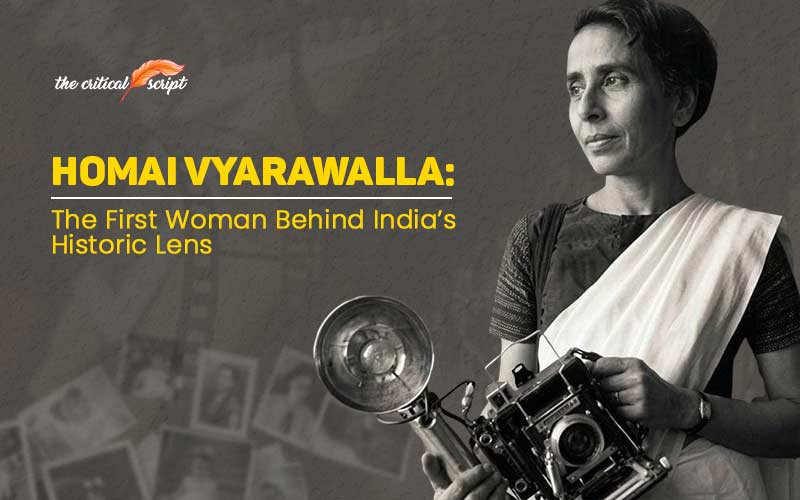
Homai Vyarawalla: The First Woman Behind India’s Historic Lens
At a time when very few women in India worked as professional photographers, Homai Vyarawalla was already carrying her camera into places where history was being made. Known as India's first woman photojournalist, Vyarawalla spent more than three decades documenting a changing India, from the final years of British rule to the early decades of the Republic. Her photographs captured politicians, diplomats, public celebrations and everyday life, giving generations a glimpse of India as it found its new identity.
Born on 9 December 1913 in Navsari, Gujarat, Homai came from a Parsi family. Her father was an actor with a travelling theatre group, so much of her childhood was spent moving from place to place. The family eventually settled in Bombay, where she continued her education and later studied at the Sir J. J. School of Art.
It was during her college years that she met Manekshaw Vyarawalla, a photographer who introduced her to photography. Her first published photographs came from a women's picnic in Bombay in the late 1930s. Her early work appeared in publications including the Bombay Chronicle and the Illustrated Weekly of India.
But getting recognition as a woman photographer was not easy. Some of her early photographs were published under Manekshaw's name. She later became known by the pseudonym Dalda 13, taken from the registration number of her car.
In 1942, Homai moved to Delhi and joined the British Information Services. From there, her camera brought her closer to the political events shaping the future of India. She photographed the final years of British rule, the transfer of power and the early years of independent India.
Her photographs captured some of the country's most recognisable figures, including Jawaharlal Nehru, Mahatma Gandhi, Sardar Vallabhbhai Patel and Indira Gandhi. Nehru was one of her favourite subjects, and her photographs of him often revealed a more relaxed and human side of the first Prime Minister of India.
Her work also went beyond political leaders. She photographed important diplomatic visits, public events and India's transformation during the early years of nation building. In 1956, she photographed the young Dalai Lama entering India, an assignment for TIME-LIFE.
What makes Vyarawalla's photographs special is the way they allow us to see history through ordinary human moments. Her camera did not only record official ceremonies. It captured expressions, gestures and fleeting moments that made historical figures appear real and human.
She continued photographing until 1970, when she retired from the profession. By then, the world of photojournalism was changing, and she was increasingly uncomfortable with the more intrusive style of photography that was emerging.
Her contribution was recognised with several honours. In 2011, she received the Padma Vibhushan, one of India's highest civilian honours.
Homai Vyarawalla died on 15 January 2012 in Vadodara, aged 98. She left behind an extraordinary photographic archive that continues to tell the story of India's transformation. She did not write about India's transition from colonial rule to independence. She stood behind a camera and witnessed it. And because Homai Vyarawalla was there, much of that history can still be seen today.
Disclaimer: The opinions expressed in this article are those of the author's. They do not purport to reflect the opinions or views of The Critical Script or its editor.
National Related Posts




Newsletter!!!
Subscribe to our weekly Newsletter and stay tuned.
Related Comments