


 INDIA ASIAN GAMES MEDAL MONITOR
·
India: 🥇 0
| 🥈 0
| 🥉 0
| Total: 0
INDIA ASIAN GAMES MEDAL MONITOR
·
India: 🥇 0
| 🥈 0
| 🥉 0
| Total: 0
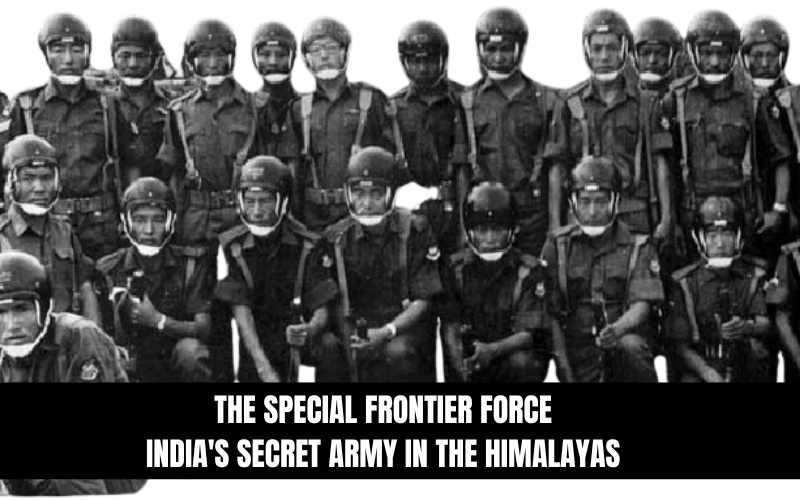
The Special Frontier Force: India's Secret Army in the Himalayas
By
the time most Indians first heard of the Special Frontier Force (SFF) in 2020
during the India–China standoff in Eastern Ladakh, the unit had already spent
nearly six decades operating in the shadows. Known variously as
"Establishment 22," the "Vikas Battalion," or simply the
SFF, it remains one of India's most secretive military formations- a force born
from the geopolitical upheavals of the Cold War and the Tibetan resistance, and
one that continues to play a critical role in India's strategic posture along
the Himalayan frontier.
The Birth of a Secret Force
The
humiliating defeat of India in the 1962 Sino-Indian War fundamentally altered
New Delhi's security thinking. The conflict exposed India's inadequate
intelligence on Chinese military movements and its lack of specialised forces
capable of operating behind enemy lines in the Himalayas. At the same time,
thousands of Tibetan refugees, including battle-hardened Khampa fighters, had
fled to India following the failed 1959 Tibetan uprising against Chinese rule.
Against
this backdrop, the Indian government established the Special Frontier Force
(SFF) on 14 November 1962. Conceived as a covert guerrilla force,
its original mission was to infiltrate Tibet during any future conflict with
China, conduct sabotage, gather intelligence, and support resistance against
the People's Liberation Army (PLA). The force was created under the
Intelligence Bureau and later came under the Cabinet Secretariat, working
closely with the Research and Analysis Wing (R&AW) after the latter's
creation in 1968.
Unlike
conventional military units, the SFF was designed to remain outside public
view. Even today, much of its organization, strength, and operational history
remains classified.
Why "Establishment 22"?
The
SFF's enduring nickname "Establishment 22" comes from its
first commander, Major General Sujan Singh Uban, an unconventional and
highly respected artillery officer. Uban had earlier commanded the 22nd
Mountain Regiment during the Second World War, and the numerical designation
became synonymous with the new force.
Major
General Uban transformed the unit into an elite mountain warfare force.
Training emphasized endurance, airborne operations, demolitions, intelligence
gathering, survival, and guerrilla warfare under extreme Himalayan conditions.
The Tibetan Connection
Perhaps
the most unique aspect of the SFF is its Tibetan heritage.
Many
of its earliest recruits came from the Chushi Gangdruk, the Tibetan
resistance movement that fought Chinese forces after Beijing consolidated
control over Tibet in the 1950s. These fighters possessed intimate knowledge of
the Himalayan terrain, spoke local dialects, and retained a strong motivation
to resist Chinese control over their homeland. India integrated these
experienced fighters into the new organization, creating a force uniquely
suited for covert operations in high-altitude environments.
Over
time, recruitment expanded to include Indian personnel, particularly Gorkhas
and officers deputed from the Indian Army, while preserving the unit's
specialized mountain-warfare character.
A Different Chain of Command
Unlike
the Para (Special Forces), MARCOS, or the Garud Commandos, the SFF occupies a
unique place within India's security architecture.
Administratively,
it functions under the Cabinet Secretariat, with close links to
R&AW, while operational control of military missions may be exercised in
coordination with the Indian Army. This hybrid intelligence-military structure
enables the SFF to undertake missions requiring secrecy, plausible deniability,
and strategic flexibility.
Its
battalions are commonly known as Vikas Battalions, although details
about their exact strength and deployment remain classified.
Baptism of Fire: The 1971 War
The
SFF's first major combat operation came during the 1971 Indo-Pakistani War.
Tasked
with operating in the Chittagong Hill Tracts (in present-day
Bangladesh), SFF commandos infiltrated deep behind Pakistani lines, destroying
communication networks, ambushing enemy positions, and supporting Indian
military advances. Their operations disrupted Pakistani troop movements and
helped isolate forces defending the eastern theatre.
Although
overshadowed by the larger narrative of Bangladesh's liberation, Operation
Eagle demonstrated the effectiveness of specialized high-altitude guerrilla
forces in unconventional warfare.
Siachen, Kargil, and Beyond
As
India's strategic priorities evolved, so too did the role of the SFF.
Since
its inception, the Special Frontier Force has reportedly played a crucial role
in several strategic operations, including Operation Meghdoot (1984) to
secure the Siachen Glacier, reconnaissance and support missions during the Kargil
War (1999), counter-insurgency and strategic surveillance operations, and
high-altitude reconnaissance along the Line of Actual Control (LAC).
Much of its operational history remains officially unacknowledged, reflecting
the highly classified nature of the force.
The 2020 Ladakh Standoff
For
decades, the SFF remained virtually invisible to the Indian public. That
changed during the 2020 India–China military standoff in Eastern Ladakh.
SFF
personnel played a significant role in occupying strategic heights on the Kailash
Range south of Pangong Tso, giving India an important tactical advantage
during negotiations with China. The public funeral of Company Leader Nyima
Tenzin, an SFF soldier who died during operations, brought unprecedented
attention to the unit and highlighted the continuing contribution of Tibetan
soldiers to India's national security.
Training and Capabilities
Although
official details remain limited, open-source information indicates that Special
Frontier Force personnel undergo rigorous training in high-altitude warfare,
mountain survival, airborne operations including parachuting, demolitions,
intelligence gathering, long-range reconnaissance, and small-team special operations,
equipping them to operate effectively in some of the world's most challenging
environments.
Their
ability to operate for extended periods in some of the world's harshest terrain
makes them one of India's premier special operations forces.
Strategic Importance in the
Himalayan Century
The
SFF was created during the Cold War, but its relevance has arguably increased
in the twenty-first century.
India's
long and disputed border with China, combined with recurring tensions along the
Line of Actual Control, places a premium on forces capable of operating in
extreme terrain, conducting covert reconnaissance, and responding rapidly to
evolving situations.
The
SFF combines intelligence, military expertise, and deep experience in Himalayan
operations, capabilities that conventional formations cannot easily replicate.
A Force That Lives in the Shadows
Unlike
many elite military units around the world, the Special Frontier Force has
deliberately remained outside the public spotlight. Its members rarely receive
public recognition, and many of its missions are likely to remain classified
for decades.
Yet
the SFF occupies a unique place in India's military history. Born out of the
trauma of the 1962 war and the struggle of Tibetan refugees, it has evolved
into one of the country's most capable special operations units. As India's
strategic competition with China continues, the force's blend of secrecy,
specialized training, and mountain warfare expertise ensures that
"Establishment 22" will remain one of the nation's most valuable, if
least visible, strategic assets.
Disclaimer: The opinions expressed in this article are those of the author's. They do not purport to reflect the opinions or views of The Critical Script or its editor.
National Related Posts











Newsletter!!!
Subscribe to our weekly Newsletter and stay tuned.
Related Comments