

 INDIA ASIAN GAMES MEDAL MONITOR
·
India: 🥇 0
| 🥈 0
| 🥉 0
| Total: 0
INDIA ASIAN GAMES MEDAL MONITOR
·
India: 🥇 0
| 🥈 0
| 🥉 0
| Total: 0
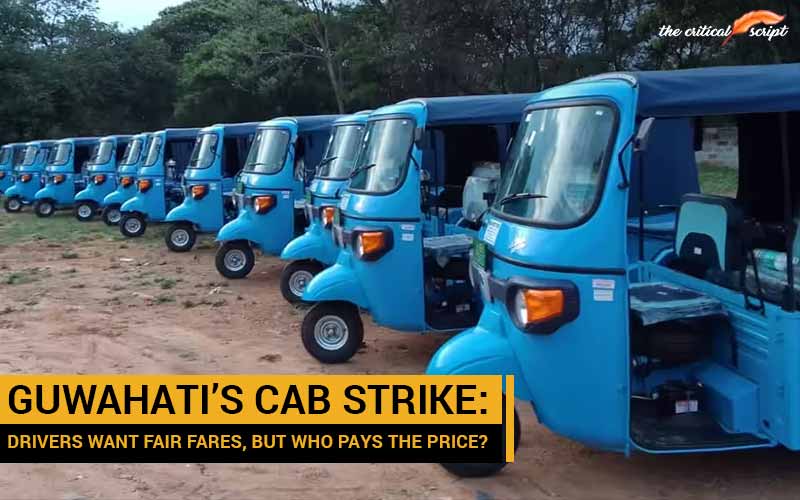
Guwahati’s Cab Strike: Drivers Want Fair Fares, But Who Pays the Price?
For two days, Guwahati’s app-based transport system was
caught in a tug-of-war between drivers demanding better earnings, transport
authorities scrutinising aggregators, and commuters simply trying to get from
one place to another.
The indefinite protest by app-based cab, auto and bike-taxi drivers began on September 1, with drivers associated with platforms such as Ola, Uber and Rapido demanding a revision of fares. They cited rising fuel, maintenance and operating costs, while arguing that fares have remained largely unchanged for seven to eight years.
Among their key demands are fares of around ₹25 per km for hatchbacks and ₹30 per km for sedans, along with waiting and cancellation charges and a formal mechanism for fixing fares.
Their concern is understandable: if the cost of running a vehicle has increased, how long can fares remain stuck in the past?
But there is another person in this equation: the passenger.
When the app stops, the passenger pays
During the protest, commuters faced cancellations, long waits and difficulty finding rides. For students, employees and people travelling to hospitals, railway stations or returning home late, app-based transport is hardly just a luxury.
I experienced the situation differently myself.
While travelling during the protest, I found Rapido autos sitting on the road. I asked one driver for a ride. ₹300, he said.
Another quoted ₹250.
The same type of ride that I normally book through the app costs me around ₹145.
One experience cannot speak for every driver. Many are genuinely struggling with fuel, maintenance, commissions and rising expenses. But it does raise an uncomfortable question:
If the fight is for fair fares, should fairness not include passengers too?
A 14-day window, but no guaranteed fare hike
The issue escalated further when the Assam Transport Department issued show-cause notices to Ola, Uber and Rapido on August 31, giving them 14 days to respond to concerns including alleged regulatory violations and fare-related issues.
That 14-day period does not mean drivers have been granted ₹25 or ₹30 per kilometre. It is a window for the companies to respond before the government decides on further action.
On September 2, one section of drivers temporarily suspended the protest following assurances from the Transport Department. However, another faction, including the Assam State Drivers Union, said the agitation would continue until their demands were addressed.
So, as of September 3, the strike cannot simply be called “over.”
Drivers deserve sustainable earnings. Aggregators must be accountable. But passengers also deserve transparent and reasonable fares.
Because when the system breaks down, someone always pays the price.
The question is: why should it always be the passenger?
Disclaimer: The opinions expressed in this article are those of the author's. They do not purport to reflect the opinions or views of The Critical Script or its editor.
Regional Related Posts








Newsletter!!!
Subscribe to our weekly Newsletter and stay tuned.
Related Comments