


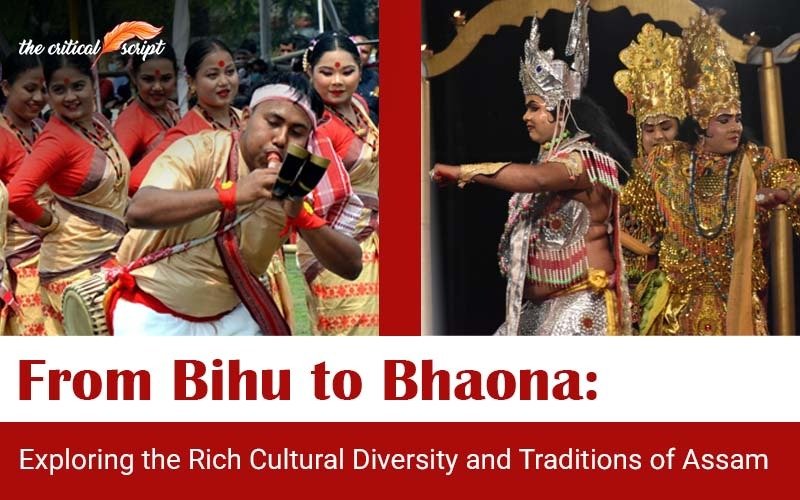
From Bihu to Bhaona: Exploring the Rich Cultural Diversity and Traditions of Assam
Assam's
cultural identity cannot be captured through a single festival, dance form or
tradition. It is a rich mosaic shaped by centuries of history, indigenous
knowledge, religious influences, migration and interactions among diverse
communities.
From
the energetic beats of the dhol during Rongali Bihu to the elaborate
performances of Bhaona in village Namghars, Assam's cultural landscape reflects
a remarkable diversity of customs, beliefs, artistic expressions and ways of
life.
While
Bihu has become one of the most recognisable symbols of Assamese identity, the
state's cultural heritage extends far beyond it. The traditions of the Bodos,
Misings, Karbis, Dimasas, Rabhas, Tiwas, Deoris, Tai-Ahoms and numerous other
communities contribute to a shared cultural landscape that is constantly
evolving.
To
understand Assam is to explore these different traditions and appreciate how
they coexist, influence one another and preserve the region's distinctive
identity.
Bihu: The Rhythm of Assamese Identity
When
discussing Assam's cultural identity, Bihu is often the first tradition that
comes to mind. More than a festival, it represents the relationship between the
people, their land and the agricultural cycles that have shaped everyday life
for generations.
Assam
celebrates three Bihus throughout the year, each associated with a different
phase of the agricultural calendar.
● Rongali Bihu (Bohag Bihu): Celebrated in April, it marks the
Assamese New Year and the arrival of spring. Traditional Bihu dance, folk
songs, community celebrations and the beats of the dhol, pepa and gogona bring
communities together.
● Bhogali Bihu (Magh Bihu): Celebrated in January after the
harvest, it is associated with abundance, community feasting, traditional games
and the lighting of meji bonfires.
● Kongali Bihu (Kati Bihu): Observed in October, it is a
comparatively solemn occasion. Earthen lamps are lit near tulsi plants and
agricultural fields, accompanied by prayers for a prosperous harvest.
What
makes Bihu particularly significant is its ability to bring people together
across different social, religious and community backgrounds. Its music, dance
and celebrations have become an important expression of Assamese identity.
Bhaona: Where Theatre Meets Devotion
If
Bihu represents the celebratory spirit of Assam, Bhaona reflects its
deep-rooted theatrical and spiritual traditions.
Introduced
by the 15th–16th-century saint and cultural reformer Srimanta Sankardeva, Bhaona
is a traditional theatrical form that combines storytelling, music, dance,
dialogue and elaborate costumes. Based largely on religious narratives from the
Bhagavata Purana and the Ramayana, these performances were instrumental in
communicating spiritual and moral teachings to communities.
Bhaona
is closely associated with Assam's Vaishnavite tradition and the institutions
known as Satras. These institutions have served as centres of religious
learning, artistic expression and cultural preservation.
Majuli,
in particular, has played an important role in preserving this heritage. Its
Satras continue to nurture traditional performing arts, mask-making, music and
theatrical practices.
The
elaborate masks used in Bhaona are themselves an important artistic tradition,
with artisans preserving techniques that have been passed down through
generations.
Bhaona
demonstrates that Assam's cultural heritage is not limited to festivals and
celebrations. It also encompasses storytelling, philosophy, craftsmanship and performing
arts.
Sattriya: Assam's Classical Dance Heritage
Another
significant contribution of Assam to India's cultural heritage is Sattriya, one
of the country's eight recognised classical dance forms.
Developed
within the Vaishnavite monasteries, Sattriya draws inspiration from the
teachings and artistic traditions established by Srimanta Sankardeva. It
combines expressive gestures, rhythmic movements, music and storytelling to
communicate devotional themes.
For
centuries, the dance form remained closely associated with the Satras. Over
time, it also found a place on mainstream cultural stages, allowing audiences
beyond Assam to appreciate its artistic depth.
Today,
Sattriya represents an important link between Assam's religious history and its
contribution to India's classical performing arts.
Sahapedia+1
Beyond Bihu: Celebrating the Traditions of Assam's
Indigenous Communities
One of the most important aspects of Assam's cultural identity is the diversity of its indigenous communities. Each has its own language, traditions, festivals, music, food and social practices.
Some
of these festivals include:
1.
Ali-Aye-Ligang – Mishing Community
Celebrated
by the Mishing community, Ali-Aye-Ligang marks the beginning of the
agricultural season, particularly the sowing of seeds. Traditional Gumrag
dance, folk music and community feasts are central to the celebrations.
2.
Baishagu – Bodo Community
Baishagu
is an important springtime and New Year festival of the Bodo community.
Celebrated around mid-April, it features traditional music, dance and community
gatherings. Instruments such as the kham, siphung and gogona contribute to its
distinctive musical character.
3.
Rongker – Karbi Community
Rongker
is an important traditional festival of the Karbis, generally observed at the
beginning of the year. It involves community prayers and rituals seeking
protection from illness, natural calamities and other difficulties, while
praying for prosperity and a good harvest.
4.
Busu Dima – Dimasa Community
Busu
Dima is an important harvest-related festival of the Dimasa community. It
brings people together through traditional music, dance, food and community
celebrations.
5.
Me-Dam-Me-Phi – Tai-Ahom Community
Me-Dam-Me-Phi
is an important Tai-Ahom festival dedicated to the remembrance and worship of
ancestors. Observed annually on January 31, it reflects the community's
longstanding traditions of ancestral reverence.
These
festivals are not simply annual celebrations. They preserve collective memory,
strengthen community relationships and provide younger generations with
opportunities to connect with their cultural roots.
Beyond these communities, Assam is also home to the Meteis, Sonowal Kacharis,
Thengal Kacharis, Chutias, Morans, Mataks, Koch-Rajbongshis, Mechs, Hajongs,
Garos, Hmars, Singphos, Khamtis, Chakmas, Barmans of Cachar, and several other
communities, including the Tea Tribe and Adivasi communities. Each brings its
own distinct traditions, languages, festivals, music, food, and cultural
practices, further enriching Assam's diverse social and cultural landscape.
The Spiritual and Religious Diversity of Assam
Assam's
cultural diversity is also reflected in its religious traditions and spiritual
practices.
The
Kamakhya Temple in Guwahati is one of India's important Shakti Peethas and the
centre of the annual Ambubachi Mela. The gathering attracts devotees, spiritual
practitioners and visitors from different parts of the country.
The
Vaishnavite movement led by Srimanta Sankardeva and Madhavdeva has also left a
lasting influence on Assamese society. Through the establishment of Namghars
and Satras, the movement shaped religious practices, literature, music, theatre
and community life.
At
the same time, Assam has a vibrant tradition of celebrating Durga Puja, Eid,
Christmas, Diwali and several other religious occasions.
This
coexistence of different spiritual traditions is an important part of the
state's social and cultural fabric.
Traditional Food, Handlooms and Craftsmanship
Culture
is not only expressed through festivals and performing arts. It is equally
visible in the food people prepare, the clothes they wear and the craftsmanship
they preserve.
Rice
remains central to Assamese cuisine, accompanied by fish preparations, leafy
vegetables, bamboo shoot dishes, khar and tenga. Traditional sweets such as
pitha and laru are particularly associated with Bihu celebrations.
Assam's
handloom heritage is equally distinctive. The mekhela chador, woven gamusa and
textiles made from Muga, Eri and Pat silk reflect generations of weaving
knowledge.
Bamboo
and cane craftsmanship, pottery, traditional mask-making and woodwork further
demonstrate the artistic capabilities of local communities.
These
practices are not merely remnants of the past. They continue to support
livelihoods, local enterprises and cultural identity across the state.
Preserving Assam's Cultural Heritage for Future Generations
Despite
its remarkable cultural diversity, Assam faces the challenge of ensuring that
traditional knowledge and practices remain relevant to younger generations.
Changing lifestyles, urbanisation, migration and the growing influence of digital culture have transformed how people engage with their heritage. Traditional languages, folk art forms, indigenous music and certain craft practices need sustained attention to remain vibrant.
Preserving
cultural heritage requires more than organising annual festivals. It involves
documenting oral histories, supporting traditional artists, encouraging young
people to learn indigenous languages, creating sustainable markets for local
crafts and strengthening community-led cultural institutions.
Educational
institutions, cultural organisations, tourism initiatives and local communities
all have an important role to play in this process.
Cultural
preservation should also recognise that traditions are living practices. They
can evolve with time while retaining the values, knowledge and identities that
make them meaningful.
Many Traditions, One Shared Identity
From
the energetic celebrations of Bihu to the devotional storytelling of Bhaona,
from the classical movements of Sattriya to the agricultural festivals of
indigenous communities, Assam's cultural identity is shaped by an extraordinary
range of traditions.
There
is no single expression that fully represents the state. Its identity emerges
from the interaction of different communities, languages, beliefs, art forms
and histories.
Understanding
Assam therefore means looking beyond its most familiar cultural symbols and
appreciating the many traditions that contribute to its social fabric.
Ultimately,
the richness of Assam lies not just in the festivals it celebrates, but in the
diversity of its people and the traditions they continue to carry forward.
Disclaimer: The opinions expressed in this article are those of the author's. They do not purport to reflect the opinions or views of The Critical Script or its editor.
Regional Related Posts





Related Comments