


 INDIA ASIAN GAMES MEDAL MONITOR
·
India: 🥇 0
| 🥈 0
| 🥉 0
| Total: 0
INDIA ASIAN GAMES MEDAL MONITOR
·
India: 🥇 0
| 🥈 0
| 🥉 0
| Total: 0
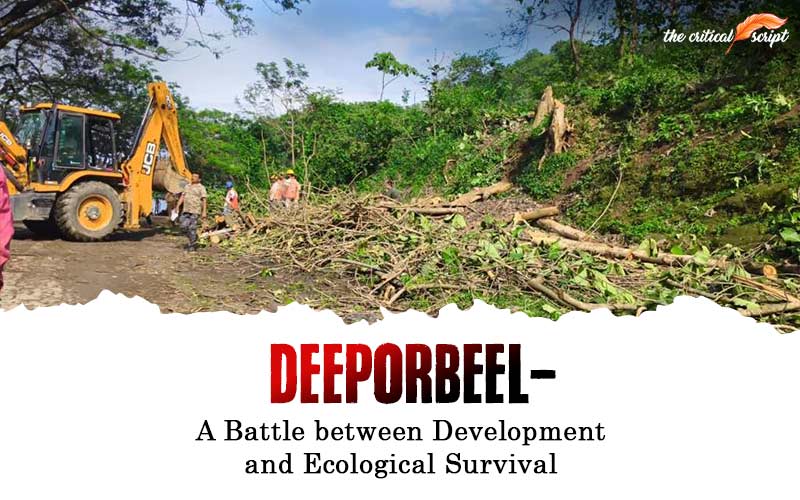
DeeporBeel - A Battle between Development and Ecological Survival
Deepor Beel, the only Ramsar-recognised wetland in
Assam, is facing serious threats to its existence, particularly in recent
times. In the name of infrastructure development, many fear that this vast
wetland, which supports the ecosystem in numerous ways, may slowly fade away
before our very eyes.
Over the years, Deepor Beel has remained one of the
most ecologically sensitive areas of Northeast India. Situated on the
southwestern edge of Guwahati, the wetland is not only a biodiversity hotspot
but also a natural ecological shield for the city. It plays a major role in
maintaining groundwater levels, controlling floods, regulating the local
climate, and supporting thousands of lives directly and indirectly.
In recent years, it has come to light that several
wild elephants have lost their lives on the railway tracks passing through the
Deepor Beel elephant corridor. To address this issue, the Northeast Frontier
Railway (NFR) has proposed the construction of a 4.7-kilometre elevated railway
corridor aimed at minimizing and eventually preventing elephant deaths in the
area.
The project has reportedly been undertaken with
recommendations from the Wildlife Institute of India, Dehradun, and a committee
formed by the National Green Tribunal (NGT). However, as the project
progresses, large-scale felling of decades-old trees has raised major
environmental concerns among citizens, activists, and conservationists. These
mature trees play a crucial role in maintaining ecological balance and
supporting the fragile wetland ecosystem.
Deepor Beel, Assam’s only Ramsar site, is home to
several species of migratory birds and is rich in flora and fauna. Apart from
migratory birds arriving from different parts of the world during winter, the
wetland also supports fish, reptiles, amphibians, insects, and mammals. It
serves as an important breeding and feeding ground for many species.
Disturbance to such a fragile ecosystem can severely affect wildlife survival
and biodiversity in the region.
The importance of Deepor Beel goes beyond wildlife
alone. Many local communities living around the wetland depend on it for their
livelihood, especially through fishing and other wetland-based economic
activities. Any ecological degradation in the area directly impacts these
communities and threatens their way of life.
Most importantly, Deepor Beel acts as a massive
natural stormwater reservoir for Guwahati. During heavy rainfall, the wetland
absorbs excess water and helps reduce urban flooding in nearby areas. Guwahati
already struggles with severe waterlogging and drainage problems during monsoon
seasons. Environmentalists fear that further destruction or shrinking of Deepor
Beel could worsen flooding in the city in the years to come.
At the same time, authorities have reassured the
public that the railway project is being undertaken with environmental
safeguards. Officials claim that for every tree cut, multiple saplings will be
planted as part of compensatory afforestation efforts. They also argue that the
elevated corridor will significantly reduce elephant deaths caused by railway
accidents, which has become a recurring concern in recent years.
This makes the issue highly complex rather than
entirely one-sided. On one hand, the protection of wildlife, especially
elephants, is necessary. On the other hand, cutting large numbers of mature
trees in an ecologically sensitive wetland raises serious concerns. Newly
planted saplings can never immediately replace the ecological value of decades-old
trees that have supported biodiversity for generations.
There is also a growing fear among many people that
Deepor Beel may gradually disappear if such infrastructure projects continue
without proper ecological planning. However, the degradation of this biodiversity-rich
wetland did not begin today. For years, Deepor Beel has suffered from illegal
encroachment, garbage dumping, pollution, unchecked urbanization, and human
interference. These factors have continuously weakened the health of the
wetland ecosystem.
Development is necessary for society, but it should
not come at the cost of environmental destruction. The government must adopt
measures and modern technologies where both development and ecological
protection can coexist. Sustainable planning, scientific monitoring, strict
environmental regulations, and transparency in implementation are essential for
projects in ecologically sensitive zones like Deepor Beel.
The Deepor Beel issue is not merely about trees. It
is about how society chooses to balance progress with responsibility. True
development is not measured only by roads, railways, or infrastructure, but
also by how well we protect the natural systems that sustain life itself.
In the coming years, the decisions taken around
Deepor Beel may become an important example of how India approaches
environmental conservation amid rapid urban and infrastructural expansion. The
hope is that this development becomes a model of coexistence between humans,
wildlife, and nature, not another story of ecological loss.
Disclaimer: The opinions expressed in this article are those of the author's. They do not purport to reflect the opinions or views of The Critical Script or its editor.
Regional Related Posts












Newsletter!!!
Subscribe to our weekly Newsletter and stay tuned.
Related Comments