

 INDIA ASIAN GAMES MEDAL MONITOR
·
India: 🥇 0
| 🥈 0
| 🥉 0
| Total: 0
INDIA ASIAN GAMES MEDAL MONITOR
·
India: 🥇 0
| 🥈 0
| 🥉 0
| Total: 0
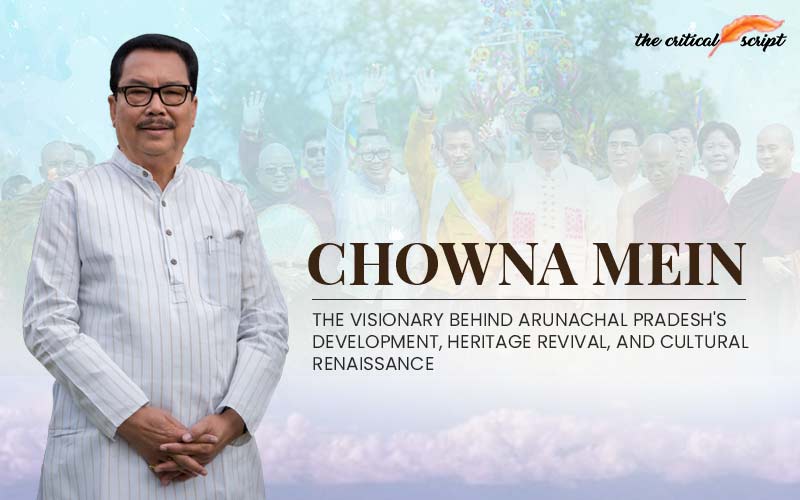
Chowna Mein: The Visionary Behind Arunachal Pradesh's Development, Heritage Revival, and Cultural Renaissance
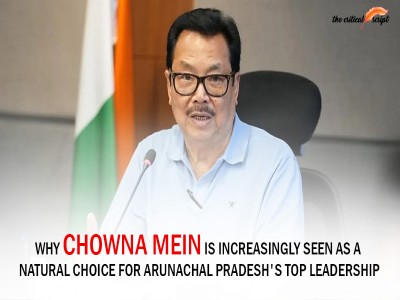
In the story of Arunachal Pradesh's transformation over the past three decades, few leaders have left as broad and enduring an imprint as Deputy Chief Minister Chowna Mein. A seasoned statesman, cultural advocate, and development-oriented administrator, he has consistently championed a model of governance that balances economic growth with cultural preservation, environmental stewardship, and social empowerment.
His leadership journey reflects a larger vision for Arunachal Pradesh, one that seeks to harness the state's immense natural resources, celebrate its diverse cultural traditions, honour its forgotten heroes, protect its ecological wealth, and create opportunities for future generations. Through his contributions across multiple sectors, Chowna Mein has emerged as one of the key architects of modern Arunachal Pradesh.
Powering Arunachal Pradesh's Future
One of Chowna Mein's most significant contributions has been his role in advancing Arunachal Pradesh's power sector and advocating the responsible development of its vast hydropower resources.
Arunachal Pradesh possesses an estimated hydropower potential of nearly 58,000 MW, making it one of India's most strategically important energy-producing states. For decades, this enormous resource remained largely untapped despite its potential to transform the state's economy.
Recognising this opportunity, Chowna Mein has consistently supported the development of major hydropower projects involving NHPC, NEEPCO, THDC India Limited, and SJVN. Together, these projects represent an installed capacity of approximately 12,500 MW and are expected to attract investments worth nearly ₹1.5 lakh crore.
He has repeatedly emphasised that hydropower should not merely generate electricity but should create long-term economic value for the people of Arunachal Pradesh. Under the agreed frameworks, the state stands to receive a 24 per cent equity share, ownership benefits valued at approximately ₹36,000 crore, annual revenues exceeding ₹1,800 crore, 12 per cent free power, and an additional 1 per cent allocation for local area development.
Beyond generation, Chowna Mein has actively worked to strengthen transmission and distribution infrastructure. In 2025, he chaired high-level review meetings focused on upgrading the state's power grid and coordinating with the Power Grid Corporation of India to improve energy delivery systems.
At national forums, including the Power Ministers' Conference, he has represented Arunachal Pradesh's interests by advocating for smart metering, reduction of AT&C losses, Green Energy Corridor inclusion, and solar-based rural electrification.
His efforts have helped position Arunachal Pradesh as a critical contributor to India's clean energy future.
Recovering Arunachal's Forgotten Heroes
History often remembers a handful of celebrated figures while overlooking countless individuals whose sacrifices shaped society. Understanding this gap, Chowna Mein played a leading role in one of Arunachal Pradesh's most important historical documentation initiatives.
During the AzadiKaAmritMahotsav celebrations, he chaired the Core Committee for Unsung Heroes of Arunachal Pradesh (CCUHAP), which was established to identify, research, and document individuals whose contributions had not received adequate recognition in mainstream historical narratives.
Working in partnership with Rajiv Gandhi University, researchers undertook extensive fieldwork across the state. Information was collected through archival records, colonial documents, oral traditions, community elders, village-level documentation, and national repositories.
The initiative brought renewed attention to remarkable figures such as MojeRiba, MatmurJamoh, ChowphaPlang Lu, PojuMimak, and many more. Many of these individuals had played significant roles in resistance movements, community leadership, and struggles against colonial domination.
Through this initiative, Chowna Mein helped restore forgotten chapters of Arunachal Pradesh's history and ensured that future generations would have access to a more complete and inclusive understanding of their past.
Reviving Cultural Consciousness Through Arunachal Rang Mahotsav
Among Chowna Mein's most celebrated cultural initiatives is the Arunachal Rang Mahotsav, which has evolved into a powerful platform for artistic expression and cultural preservation.
The festival was conceived as a theatre movement dedicated to presenting Arunachal Pradesh's history, folklore, indigenous narratives, and social realities through performing arts. It represents a unique attempt to use theatre not only as entertainment but also as a vehicle for historical memory and cultural education.
The 2023 edition expanded beyond Arunachal Pradesh, staging performances in New Delhi, Mumbai, Kolkata, and Guwahati. Productions explored themes such as tribal resistance movements, the state's journey toward statehood, indigenous folklore, and the stories of unsung heroes.
The 2024 International Edition held in Itanagar attracted artists and participants from India and abroad, creating opportunities for cultural exchange, workshops, and collaborative performances. The festival also generated employment for more than one hundred artists, technicians, and cultural practitioners.
As Chief Patron, Chowna Mein has consistently supported the initiative and encouraged productions such as Ahimsaka, commissioned through the Tai Khamti Heritage & Literature Society.
Through Arunachal Rang Mahotsav, he has demonstrated that culture can serve as a powerful instrument of identity, education, and social cohesion.
Preserving Tai Khamti Heritage and Literary Traditions
As a prominent leader from the Tai Khamti community, Chowna Mein has devoted considerable attention to preserving one of Northeast India's most significant indigenous literary traditions.
The Tai Khamti community possesses its own script, ancient Buddhist manuscripts, religious texts, and literary heritage that connects Arunachal Pradesh with the wider Tai cultural world of Southeast Asia.
Recognising the importance of safeguarding this legacy, he has consistently supported the Tai Khamti Heritage & Literature Society (TKHLS), which works on script preservation, manuscript conservation, literary documentation, oral history collection, and cultural research.
His efforts have encouraged younger generations to engage with their linguistic and cultural heritage while helping preserve centuries-old knowledge systems for future generations.
Promoting Spiritual Tourism and Buddhist Heritage
Another defining aspect of Chowna Mein's leadership has been his role in promoting Buddhist heritage and spiritual tourism.
Under his guidance, the Golden Pagoda at Namsai has emerged as one of Northeast India's most prominent Buddhist destinations. What was once a regional spiritual centre has become an internationally recognised landmark attracting visitors from across India and abroad.
In 2025, several major Buddhist infrastructure projects were launched at Nongtaw, including the 108-foot Buddha Statue, the Vajirasana Buddha Vihara with a capacity of approximately one thousand devotees, and the MahabodhiSanghavasa residential complex designed to accommodate one hundred monks.
He has also championed the idea of a Buddhist tourism circuit linking Namsai, Mechukha,Tuting, Itanagar, West Kameng, and Tawang, creating opportunities for cultural tourism and regional economic development.
Taking Sangken to the Global Stage
Among Chowna Mein's most successful cultural initiatives has been the internationalisation of the Sangken Festival, the traditional New Year celebration of the Tai Khamti community.
Traditionally observed as a festival of purification, renewal, and blessings, Sangken has grown under his leadership into the International MahaSangken Festival.
Held at the Golden Pagoda in Namsai, the festival now attracts participants from countries including Thailand, Myanmar, Cambodia, Switzerland, Italy, England, and the United States. Activities include Buddha bathing rituals, candle boat ceremonies, sky lantern releases, cultural processions, and performances by local and international artists.
The festival has significantly enhanced Arunachal Pradesh's visibility within the global Buddhist community while generating tourism and economic opportunities for local communities.
Protecting Nature and Promoting Conservation
Chowna Mein has increasingly emphasised environmental conservation as a core component of sustainable development.
Arunachal Pradesh forms part of the Eastern Himalaya Biodiversity Hotspot and is home to extraordinary species such as the red panda, clouded leopard, Mishmi takin, hornbills, and countless rare orchids and endemic plants.
His support for conservation initiatives has included awareness campaigns, biodiversity promotion, eco-tourism advocacy, and community participation programmes.
In 2025, he launched NadiUtsav in Namsai, featuring the release of 30,000 fish fingerlings, river restoration activities, conservation efforts for endangered fish species, anti-illegal fishing campaigns, and tree plantation drives.
Similarly, Jal Utsav focused on water conservation, sustainable resource management, community participation, and strengthening awareness under the Jal Jeevan Mission.
These initiatives reflect a growing commitment to balancing development with ecological responsibility.
Reviving World War II Heritage and Stilwell Road Tourism
Recognising the historical significance of Arunachal Pradesh during the Second World War, Chowna Mein has actively promoted heritage tourism linked to the Stilwell Road and Pangsau Pass.
The historic Stilwell Road, constructed during World War II, connected India, Myanmar, and China and played a critical role in the Burma Campaign.
To preserve this legacy, he has advocated the creation of a dedicated World War II Museum at Jairampur. The proposed museum is expected to document not only military operations but also the contributions of indigenous communities such as the Singpho, Khamti, Adi, Nocte, Mishmi, and Naga peoples who served as soldiers, guides, porters, and wartime support personnel.
He has also promoted heritage tourism initiatives, including the Pangsau Pass International Festival, vintage Willys Jeep Rallies, and heritage circuits centred around the historic Stilwell Road.
These efforts have brought renewed attention to Arunachal Pradesh's role in global history while creating new tourism opportunities for eastern districts.
Empowering Youth as Partners in Progress
Perhaps no theme is more central to Chowna Mein's vision than youth empowerment.
The declaration of 2024 as the "Year of the Youth" reflected his belief that the future of Arunachal Pradesh depends on investing in the aspirations, skills, and creativity of young people.
His focus areas include entrepreneurship, agriculture, sports, education, innovation, and social responsibility. He has supported sports infrastructure projects, including stadiums at Chongkham, Namsai Circle, and APL Ground, while also promoting skill development and entrepreneurship initiatives.
Equally important has been his commitment to combating substance abuse. He has repeatedly advocated the use of sports, education, community engagement, and rehabilitation programmes as effective tools in addressing drug addiction among youth.
His approach recognises young people not
merely as beneficiaries of development but as active partners in shaping the
state's future.
What distinguishes Chowna Mein's leadership is his ability to view development in its broadest sense. For him, progress is not measured solely by roads, buildings, or economic indicators. It is equally reflected in cultural pride, historical awareness, environmental stewardship, and the empowerment of future generations.
From harnessing Arunachal Pradesh's hydropower potential and strengthening energy infrastructure to preserving indigenous heritage, promoting Buddhist tourism, documenting unsung heroes, protecting biodiversity, reviving historical memory, and empowering youth, his contributions span virtually every dimension of public life.
His leadership represents a vision of Arunachal Pradesh that is modern yet deeply rooted in tradition, economically ambitious yet environmentally responsible, and globally connected while remaining firmly anchored in its cultural identity.
In many ways, the story of Chowna Mein is inseparable from the story of Arunachal Pradesh's own transformation, a journey of progress guided by heritage, identity, and a commitment to inclusive development.
Disclaimer: The opinions expressed in this article are those of the author's. They do not purport to reflect the opinions or views of The Critical Script or its editor.
Politics Related Posts




Newsletter!!!
Subscribe to our weekly Newsletter and stay tuned.
Related Comments