


 INDIA ASIAN GAMES MEDAL MONITOR
·
India: 🥇 0
| 🥈 0
| 🥉 0
| Total: 0
INDIA ASIAN GAMES MEDAL MONITOR
·
India: 🥇 0
| 🥈 0
| 🥉 0
| Total: 0
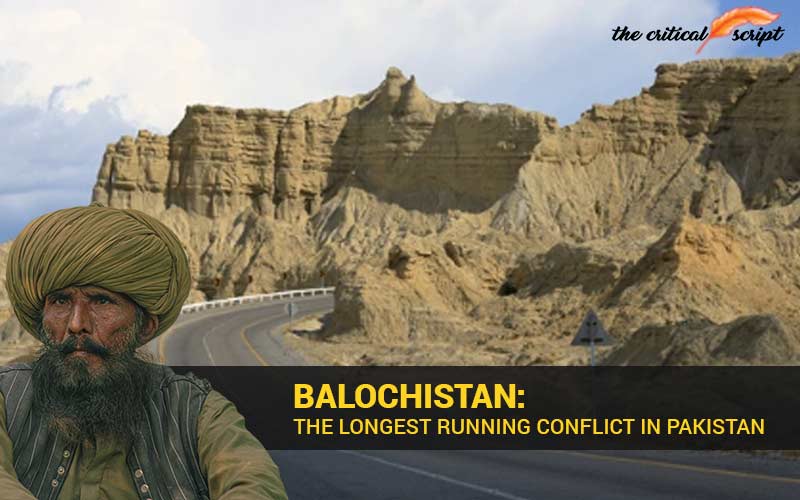
Balochistan: The Longest Running Conflict in Pakistan
The conflict in Balochistan is one
of the most enduring and least understood struggles in modern South Asia.
Stretching across vast deserts, rugged mountain ranges, and a strategic
coastline on the Arabian Sea, Balochistan occupies nearly forty-four percent of
Pakistan's land area. Yet despite its size and immense natural wealth, it
remains among the country's least developed regions.
For more than seven decades,
Balochistan has witnessed recurring cycles of rebellion, military operations,
political negotiations, and demands for greater autonomy. While often portrayed
as a separatist insurgency, the conflict is rooted in a far more complex
history involving colonial legacies, tribal politics, contested state
formation, resource extraction, regional geopolitics, and competing visions of
identity and nationhood.
To understand the contemporary
conflict, one must begin long before the creation of Pakistan in 1947.
The Historical Foundations of Baloch Identity
The Baloch people trace their
origins through a mixture of historical traditions, oral histories, and
migrations that remain subjects of scholarly debate. By the medieval period,
Baloch tribes had established themselves across a vast territory stretching
from present-day southeastern Iran into southwestern Pakistan and southern
Afghanistan.
Unlike many settled societies, the
Baloch developed a largely tribal political order. Power rested with tribal
chiefs, known as sardars, whose authority was based on kinship, customary law,
and military strength. Despite tribal divisions, a distinct Baloch identity
gradually emerged through a shared language, culture, and historical memory.
The most significant political
institution to emerge in Baloch history was the Khanate of Kalat. Established
in the seventeenth century,Kalat became the principal Baloch state and
exercised varying degrees of authority over much of present-day Balochistan.
Although its control fluctuated and many tribes retained substantial autonomy,
the Khanate represented an important symbol of Baloch political identity.
The arrival of the British Empire in
the nineteenth century transformed the region. Concerned about Russian
expansion toward India, British strategists viewed Balochistan as a critical
buffer zone. Through a series of treaties, military expeditions, and political
arrangements, the British established influence over the Khanate of Kalat and
surrounding territories.
By the early twentieth century,
Balochistan had become a patchwork of directly administered British
territories, tribal agencies, and princely states. This fragmented
administrative structure would later complicate the transition to independence.
Partition and the Kalat Question
The roots of the modern conflict are
closely tied to the events surrounding the partition of British India in 1947.
As British rule ended, the future of
the princely states became a central political question. Unlike directly
administered provinces, princely states theoretically possessed the option of
joining India, joining Pakistan, or negotiating their future status.
The Khanate of Kalat asserted that
it was not merely another princely state but a treaty-based entity that had
enjoyed a unique relationship with the British Crown. On 11 August 1947, Kalat
declared independence, and negotiations began regarding its future relationship
with Pakistan.
For several months, discussions
continued between the leadership of Kalat and the newly established Pakistani
government. Eventually, in March 1948, the Khan of Kalat signed an instrument
of accession to Pakistan.
This event remains one of the most
controversial episodes in Baloch history. Pakistani historians generally regard
the accession as legal and final. Many Baloch nationalists, however, argue that
the accession occurred under pressure and did not reflect the genuine
aspirations of the Baloch people.
The disagreement over 1948 has
become the foundational historical grievance of modern Baloch nationalism.
The First Rebellions
Resistance emerged almost
immediately after accession.
Prince Abdul Karim, the brother of
the Khan of Kalat, launched an armed uprising in 1948. Although the rebellion
was relatively small and quickly suppressed, it established a pattern that
would recur repeatedly over the following decades.
Further unrest emerged in 1958 when
Pakistan abolished the remaining princely structures in Balochistan. The arrest
of the Khan of Kalat triggered another insurgency led by NawabNauroz Khan. The
rebellion was eventually defeated, and several participants were executed,
events that remain deeply embedded in nationalist memory.
Additional unrest followed during
the early 1960s as tribal leaders challenged Islamabad's authority. Although
these movements were limited in scale, they demonstrated the persistence of
Baloch dissatisfaction with the political arrangements imposed after independence.
The Insurgency of the 1970s
The most significant conflict before
the twenty-first century erupted during the 1970s.
The creation of Bangladesh in 1971
profoundly altered Pakistan's political landscape. Amid efforts to restructure
federal-provincial relations, nationalist parties achieved electoral success in
Balochistan and formed a provincial government.
However, tensions soon emerged
between provincial leaders and the central government. In 1973, Prime Minister
Zulfikar Ali Bhutto dismissed the elected Balochistan government, accusing it
of conspiring against the state.
The dismissal triggered a major
insurgency.
Thousands of tribal fighters took up
arms against the Pakistani military. The conflict escalated into one of the
largest internal security challenges in Pakistan's history. Estimates vary, but
some accounts suggest that tens of thousands of troops were deployed. Iran,
concerned about separatist sentiments among its own Baloch population,
reportedly provided military assistance to Pakistan.
The conflict continued until 1977
and caused significant casualties and displacement. Although the insurgency was
eventually contained, the underlying grievances remained unresolved.
Many contemporary nationalist
leaders view the events of the 1970s as a turning point that deepened distrust
between Baloch society and the Pakistani state.
The Emergence of Modern Baloch Nationalism
The nature of Baloch nationalism
evolved significantly during the late twentieth century.
Earlier rebellions had been dominated
by tribal elites seeking to preserve traditional authority. By contrast, modern
nationalist movements increasingly incorporated students, intellectuals, urban
activists, and middle-class professionals.
Universities became important
centres for political mobilization. A new generation of activists began framing
the Baloch question not merely as a tribal dispute but as a struggle for
national rights, political representation, cultural recognition, and economic
justice.
This transformation broadened the social
base of nationalism and helped sustain the movement beyond traditional tribal
structures.
Natural Resources and the Politics of Extraction
No discussion of Balochistan is
complete without examining the role of natural resources.
The province possesses some of South
Asia's most significant reserves of natural gas, copper, gold, coal, and other
minerals. The discovery of natural gas at Sui in the 1950s marked a major
turning point in Pakistan's economic development. For decades, gas from Balochistan
supplied households and industries across the country.
Yet many Baloch communities argue
that they have not received proportional benefits from these resources.
Nationalists frequently point to low development indicators, inadequate
infrastructure, poor educational outcomes, and limited industrialization as
evidence of economic marginalization.
The Pakistani state counters that
substantial investments have been made in roads, schools, hospitals, and
development programmes, and that security challenges have often hindered
implementation.
The debate over resource ownership
and revenue sharing remains one of the most contentious dimensions of the
conflict.
The Death of Akbar Bugti and the Contemporary Insurgency
The modern phase of the conflict is
often traced to the death of Nawab Akbar Bugti in 2006.
Bugti was one of the most
influential political figures in Balochistan, having served as governor, chief
minister, and tribal leader. Relations between Bugti and the government
deteriorated amid disputes over resource control, military deployments, and
provincial autonomy.
In August 2006, Bugti was killed
during a military operation.
His death had a profound impact on
Baloch politics. For many nationalists, it symbolized the failure of political
dialogue and reinforced perceptions of state repression. Militant recruitment
increased, and several armed organizations expanded their activities.
Since then, insurgent groups have
carried out attacks on security forces, infrastructure, energy installations,
and foreign interests. The conflict has become increasingly decentralized, with
multiple organizations pursuing varying objectives.
Gwadar, China, and Strategic Transformation
The development of Gwadar Port has
elevated Balochistan's importance far beyond Pakistan.
Located near the Strait of Hormuz,
one of the world's most important maritime chokepoints, Gwadar occupies a
strategically significant position connecting South Asia, Central Asia, and the
Middle East.
The launch of the China-Pakistan
Economic Corridor transformed Gwadar into a flagship project of China's Belt
and Road Initiative. Billions of dollars have been invested in ports, highways,
energy infrastructure, and industrial projects.
Supporters argue that these
initiatives offer unprecedented opportunities for economic growth and regional
integration. Critics, however, contend that local communities have often
remained on the margins of decision-making processes and have not benefited
proportionately from development projects.
Consequently, Gwadar has become both
a symbol of economic promise and a focal point of political contestation.
Human Rights and the Missing Persons Issue
Perhaps no issue has generated more
controversy than allegations of enforced disappearances.
Human rights organizations, journalists,
and activists have documented numerous cases involving individuals allegedly
detained by security agencies and subsequently reported missing by their
families.
The issue has become central to
Baloch political discourse. Long marches, protests, and advocacy campaigns have
sought answers regarding the fate of missing persons.
The state maintains that many
allegations are exaggerated, politically motivated, or linked to ongoing
security operations against militant groups.
Regardless of interpretation, the
issue continues to influence public perceptions and remains a significant
obstacle to reconciliation.
The Uncertainty
The conflict in Balochistan cannot
be reduced to a simple struggle between insurgents and the state. It is the
product of historical disputes, contested memories, uneven development,
resource politics, regional geopolitics, and competing visions of sovereignty
and identity.
Over seventy-five years after the
creation of Pakistan, the questions raised during the accession of Kalat, the
insurgencies of the twentieth century, and the contemporary debates over
autonomy and development remain unresolved.
Balochistan today stands at the
intersection of immense opportunity and persistent instability. Its future will
likely depend not only on security measures or economic investment but also on
the ability of all stakeholders to address historical grievances, build
political trust, and create institutions capable of accommodating the
province's unique identity within a rapidly changing region.
Disclaimer: The opinions expressed in this article are those of the author's. They do not purport to reflect the opinions or views of The Critical Script or its editor.
World Related Posts









Newsletter!!!
Subscribe to our weekly Newsletter and stay tuned.
Related Comments