


 INDIA ASIAN GAMES MEDAL MONITOR
·
India: 🥇 0
| 🥈 0
| 🥉 0
| Total: 0
INDIA ASIAN GAMES MEDAL MONITOR
·
India: 🥇 0
| 🥈 0
| 🥉 0
| Total: 0
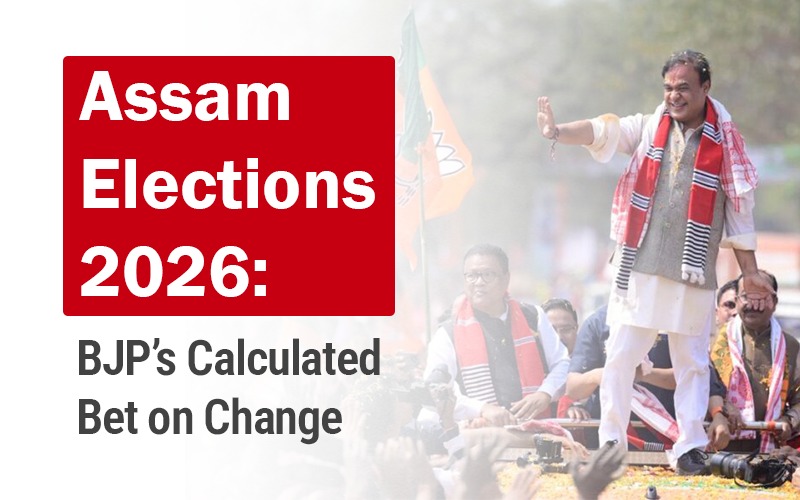
Assam Elections 2026: BJP’s Calculated Bet on Change
The Bharatiya
Janata Party’s candidate list for the Assam Assembly Elections 2026 is not a
routine reshuffle, it is a calculated political reset. By dropping several prominent leaders and replacing
sitting MLAs across key constituencies, the party has made a decisive shift: winnability now outweighs legacy.
This is not merely
about candidates. It is about control, messaging, and the willingness to
disrupt one’s own structure in pursuit of electoral advantage.
Anti-Incumbency: Cutting Early, Cutting Deep
The most striking
feature of the list is the willingness to cut at the top. The omission of senior figures like
Siddhartha Bhattacharya and Atul Bora signals that even long-standing loyalty
and stature offer no guarantee of renomination.
Similarly, sitting
MLAs such as Amiya Bhuyan in Bihpuria and HemangaThakuriain Palasbari have been
replaced, a move that reflect a clear reading of constituency-level fatigue and
dissatisfaction.
The BJP appears to
have internalised a key lesson from recent elections across India: state-level popularity cannot
fully offset local anti-incumbency. By acting early, the party is attempting to neutralise
discontent before it consolidates into opposition momentum.
Performance vs Perception
In seats like
Hojai and Behali, the replacement of incumbents such as Ramakrishna Ghosh and
DigantaGhatowal suggests that performance is being judged not only on
governance metrics but also on public perception.
In contemporary
electoral politics, perception often outweighs policy. A candidate seen as
disconnected or ineffective can become a liability regardless of broader party
performance. BJP’s strategy indicates a recognition that optics and local credibility
matter as much as delivery.
This is
pre-emptive politics of removing potential weak links before they are tested at
the ballot box.
The Himanta Factor: Absorption as Strategy
A defining feature
of Assam’s current political landscape is the role of Chief Minister HimantaBiswaSarma
himself, a leader who transitioned from the Congress to the BJP and has since institutionalised political absorption as a
core strategy.
Under his
leadership, the BJP in Assam has consistently brought in leaders from the
Congress and other opposition parties, offering them electoral space and
organisational relevance. The 2026 ticket distribution reflects this approach
more sharply than ever.
Several sitting
BJP leaders have been replaced by recent entrants, many of them former Congress figures, who are perceived to
bring immediate electoral advantage, local networks, and community influence.
This marks a shift
from ideological consolidation to electoral pragmatism.
However, this
strategy also raises a critical tension within the party. As new entrants are
accommodated, sections of the old BJP guard, long-time karyakartas, who built the organisation from the
ground up may appear increasingly sidelined.
The message,
implicit but clear, is that:
political utility now
takes precedence over organisational seniority.
Social Engineering: Precision Over Loyalty
Across
constituencies like Barchalla, Bokajan, and Silchar, the dropping of leaders
such as Ganesh Limbu, NomalMomin, and Dipayan Chakraborty reflects a deeper
layer of strategy, micro-level
social engineering.
Assam’s electoral
politics is shaped by a complex interplay of caste, tribe, region, and
identity. BJP’s candidate selection suggests a careful recalibration of these
factors, aimed at maximising vote conversion rather than merely expanding
outreach.
This is not
broad-stroke politics, it is precision targeting, even if it comes at the cost of internal sentiment.
The Urban Reset
The Guwahati
region offers a particularly telling example. The decision to deny a ticket to
Siddhartha Bhattacharya in the state’s political and economic hub signals an
attempt at an urban
reset.
Urban voters are
increasingly driven by governance issues such as flooding, traffic,
infrastructure, and service delivery. BJP appears to be betting that new faces with contemporary appeal can better address these
expectations than established leaders.
Leadership and Centralisation
The scale and
boldness of these decisions underline a centralised leadership model, with candidate selection tightly
aligned to the broader political vision of the current leadership.
This reflects a
shift toward high-control,
high-accountability politics, where performance, perception, and strategic fit
outweigh legacy considerations.
Risk vs Reward
BJP’s strategy is
bold but not without risk.
Risks:
·
Discontent among dropped leaders
·
Alienation of long-time karyakartas
·
Potential rebel candidates
·
Perception of over-reliance on defectors
Rewards:
·
Immediate expansion of political base
·
Reduced anti-incumbency
·
Stronger electoral positioning in key constituencies
BJP is effectively
betting that electoral gains will outweigh organisational discomfort.
Beyond
Candidates: A Structural Shift
What emerges from this ticket distribution is a deeper transformation in
how the BJP operates in Assam, with the party shifting from loyalty to
winnability, from cadre-based strength to coalition expansion, and from
ideological rigidity to strategic flexibility, which is driven by a leadership
style that prioritises results over sentiment.
The Real Test
Ultimately,
electoral strategy is only as strong as its execution. The success of this
approach will depend on whether new candidates can quickly establish
credibility and convert political calculations into votes.
Because in the
end, elections are not won through strategy alone, they are won through trust on the ground.
BJP has chosen disruption
over comfort.
Whether that
disruption strengthens or strains its political base will be decided by the
voters of Assam.
Disclaimer: The opinions expressed in this article are those of the author's. They do not purport to reflect the opinions or views of The Critical Script or its editor.
Politics Related Posts








Newsletter!!!
Subscribe to our weekly Newsletter and stay tuned.
Related Comments