


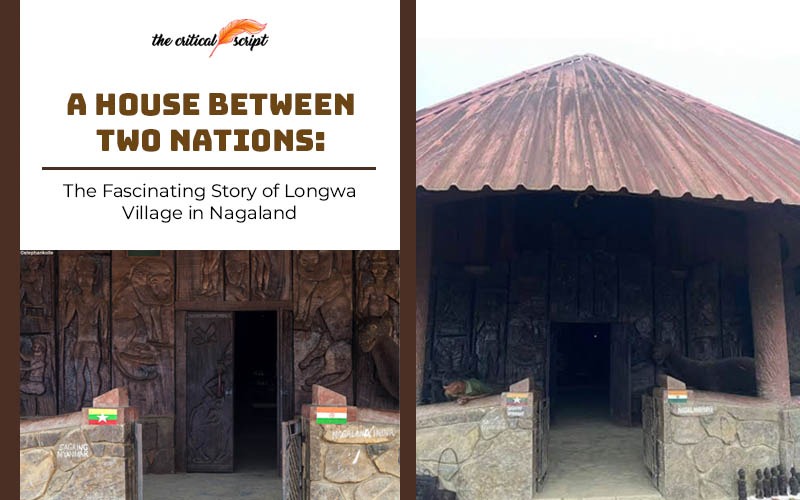
A House Between Two Nations: The Fascinating Story of Longwa Village in Nagaland
Imagine having
breakfast in India, walking into your living room in Myanmar, and spending the
evening in a house that belongs to two countries at once. Sounds unbelievable?
But this is a reality in Longwa village of Nagaland!
Located in the Mon district of Nagaland, Longwa is one of the most fascinating villages along the India–Myanmar border. What makes this village truly unique is that the international boundary between the two countries passes directly through the house of its hereditary chief, known as the Angh.
Yes, you read that right! A single house stands in two different countries.
A House Divided by an International Border
The residence of the Angh is perhaps the most remarkable attraction of Longwa. The India–Myanmar border runs right through the middle of his house, dividing different sections of the residence between the two nations. This means that one part of the house lies in India, while another part falls within Myanmar. It is not every day that you come across a home where an international boundary runs through its rooms!
One Chief, Two Countries
Longwa is predominantly inhabited by the Konyak Naga community, known for its rich cultural heritage and traditions. The village is traditionally governed by the Angh, a hereditary chief who holds an important position in the community. Interestingly, his traditional authority extends across the international boundary, connecting Konyak settlements on both sides. This makes Longwa an extraordinary example of how traditional systems of leadership and community ties existed long before modern international boundaries divided the region.
Where Borders Do
Not Divide People
Perhaps the most beautiful aspect of Longwa is the connection shared by its people. For generations, families and communities have maintained close cultural and social ties across what is now the India–Myanmar border. Their shared traditions, relationships and way of life reflect a history that cannot simply be divided by a line on a map. Although international borders bring administrative and legal distinctions, the people of Longwa share a cultural identity that connects both sides.
More Than Just a Tourist Attraction
Longwa is not just a place where two countries meet. It is a living reminder of history, culture and the unique identity of the Naga people. From its unusual geographical location to its traditional system of governance, the village offers a fascinating glimpse into a way of life that is rarely seen elsewhere. A house in two countries, a village connected by one culture, and a story that reminds us that while borders may divide territories, they cannot always divide people.
Disclaimer: The opinions expressed in this article are those of the author's. They do not purport to reflect the opinions or views of The Critical Script or its editor.
Regional Related Posts







Newsletter!!!
Subscribe to our weekly Newsletter and stay tuned.
Related Comments