


 INDIA ASIAN GAMES MEDAL MONITOR
·
India: 🥇 0
| 🥈 0
| 🥉 0
| Total: 0
INDIA ASIAN GAMES MEDAL MONITOR
·
India: 🥇 0
| 🥈 0
| 🥉 0
| Total: 0
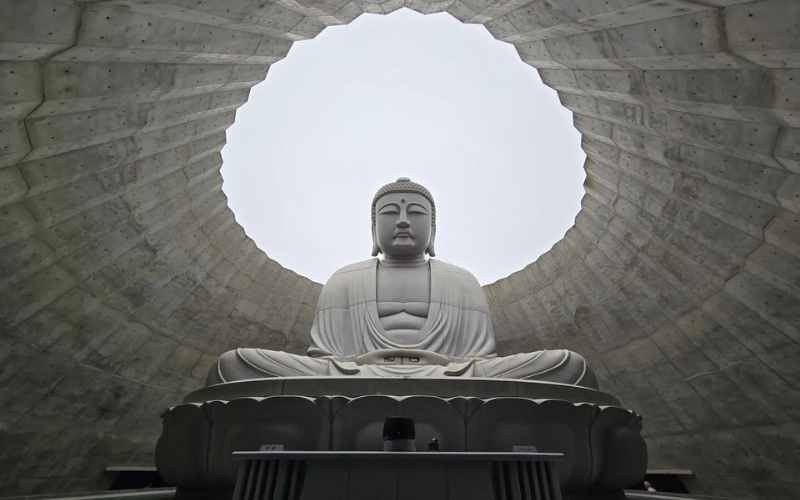
How the Teachings of the Buddha Spread Across Asia: A Journey That Changed Civilizations
More than 2,500 years ago, a prince from the foothills of the Himalayas renounced a life of luxury in search of answers to the deepest questions of human existence. Siddhartha Gautama, who would later become the Buddha, did not seek to establish a religion or build an empire. His quest was deeply personal - to understand the nature of suffering and discover a path to liberation. Yet the wisdom he attained beneath the Bodhi Tree at Bodh Gaya would transcend kingdoms and centuries, shaping the spiritual, philosophical, and cultural landscape of Asia. Today, Buddhism is followed by over 500 million people worldwide, making it one of humanity's most influential religious and philosophical traditions.
After attaining enlightenment, the Buddha travelled extensively across the Gangetic plains of northern India for nearly forty-five years, teaching what came to be known as the Dharma. His first sermon at Sarnath introduced the Four Noble Truths and the Noble Eightfold Path, offering a practical framework to overcome suffering through ethical conduct, meditation, and wisdom. What distinguished his teachings was not merely their philosophical depth but their accessibility. At a time when sacred knowledge was largely communicated in Sanskrit and confined to the educated elite, the Buddha chose to preach in the vernacular languages spoken by ordinary people. Farmers, merchants, artisans, kings, and labourers alike found meaning in his message. He rejected rigid social hierarchies, opened the doors of spiritual practice to people from every background, and founded the Sangha, the community of monks and nuns that would become the vehicle for preserving and spreading his teachings.
The Sangha became one of history's earliest organised missionary institutions. Buddhist monks travelled on foot across villages, forests, and kingdoms carrying little more than robes and alms bowls. Their monasteries evolved into centres of learning, meditation, healthcare, and community life, where philosophical debates flourished alongside moral instruction. In an era long before printing presses or universities, these monasteries safeguarded the Buddha's teachings through oral tradition before they were eventually committed to writing. This network ensured that Buddhism spread peacefully across the Indian subcontinent within a few centuries of the Buddha's lifetime.
The defining turning point came during the reign of Emperor Ashoka of the Mauryan Empire in the third century BCE. Initially remembered as a formidable conqueror, Ashoka underwent a profound transformation after witnessing the horrors of the Kalinga War. Deeply moved by the immense human suffering caused by the conflict, he embraced Buddhism and dedicated his reign to the principles of compassion, non-violence, and righteous governance. Instead of pursuing military conquest, he championed what he called "conquest through Dharma." His reign remains one of history's earliest examples of values-based governance.
Ashoka built thousands of stupas and monasteries, convened the Third Buddhist Council to preserve the authenticity of the teachings, and inscribed messages promoting ethical conduct, religious tolerance, and compassion on monumental rock and pillar edicts across his vast empire. Many of these inscriptions survive to this day, providing invaluable historical evidence of his vision for a just and humane society. Under his patronage, Buddhism evolved from a regional spiritual movement into an international tradition.
Ashoka's greatest contribution, however, lay beyond the boundaries of his empire. Believing that the Dharma belonged to all humanity, he dispatched missionary delegations to distant lands. Among these missionaries were his own son, Mahinda Thera, and daughter, Sanghamitta Theri, whose journey to Sri Lanka would become one of the most consequential events in Buddhist history. Mahinda's dialogue with King Devanampiya Tissa persuaded the Sri Lankan monarch to embrace Buddhism, transforming the island into the foremost centre of Theravāda Buddhism. Soon afterwards, Sanghamitta arrived carrying a sapling of the sacred Bodhi Tree under which the Buddha had attained enlightenment. She established the Bhikkhuni order for women and helped preserve Buddhist monastic traditions in Sri Lanka. The sacred tree planted at Anuradhapura from that sapling continues to be revered today as one of the world's oldest living trees with a recorded history.
As Buddhist missions expanded, so too did the routes that connected ancient civilizations. Long before modern globalization, merchants travelling along the Silk Road and the maritime trade routes linking India with Sri Lanka and Southeast Asia carried not only silk, spices, and precious stones but also religious ideas and cultural traditions. Buddhist monks often accompanied merchant caravans, establishing monasteries along important commercial centres where travellers found shelter, education, and spiritual guidance. Trade became one of Buddhism's most powerful allies, allowing its teachings to move naturally across political frontiers.
Another great imperial patron emerged several centuries after Ashoka. Emperor Kaniṣka I of the Kushan Empire transformed northwestern India and Central Asia into a flourishing crossroads of Buddhist scholarship and artistic innovation. Widely regarded as the greatest royal patron of Buddhism after Ashoka, Kaniṣka supported the Fourth Buddhist Council and encouraged the development of Mahāyāna Buddhism. Under his reign, Buddhist monks travelled extensively across the Silk Road into Central Asia and China, while the Gandhara school of art produced the earliest human representations of the Buddha, blending Indian spiritual themes with Hellenistic artistic traditions. These remarkable sculptures profoundly influenced Buddhist iconography throughout Asia.
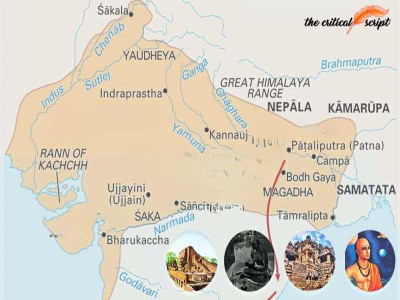
Timeline: The Spread of Buddhism Across Asia

As Buddhism spread geographically, it also evolved intellectually. Among its greatest philosophers was Nāgārjuna, whose profound exploration of śūnyatā, or emptiness, transformed Mahāyāna Buddhist thought. His Madhyamaka, or "Middle Way," philosophy argued that all phenomena exist through interdependence rather than possessing inherent, permanent existence. Nāgārjuna's ideas profoundly shaped Buddhist philosophy across India, Tibet, China, Korea, Japan, and Vietnam, earning him recognition as one of the greatest philosophers in world intellectual history.
The expansion of Buddhism also gave rise to some of the world's earliest international centres of higher learning. Universities such as Nalanda, Vikramashila, Odantapuri, and Valabhi attracted scholars from every corner of Asia. These institutions were not merely monasteries but vibrant centres of philosophy, astronomy, medicine, mathematics, linguistics, and logic. Students travelled thousands of kilometres in pursuit of knowledge, making ancient India one of the world's foremost intellectual destinations.
Among the most celebrated of these pilgrims were the Chinese monks Faxian, Xuanzang, and Yijing. Their journeys across deserts, mountain passes, and dangerous frontiers reflected extraordinary devotion to scholarship. Faxian travelled during the Gupta period to collect authentic monastic texts and later documented his experiences in the Record of Buddhist Kingdoms, an invaluable account of early Indian society. Two centuries later, Xuanzang undertook an even more ambitious expedition, spending several years studying at Nalanda before returning to China with over six hundred manuscripts. His monumental work, The Great Tang Records on the Western Regions, remains one of the most important historical sources for understanding ancient India. Yijing followed in their footsteps, documenting Buddhist education and monastic discipline across India and Southeast Asia, further strengthening intellectual exchanges between civilizations.
Equally significant was Kumārajīva, the great scholar and translator born in Central Asia. His lucid and elegant translations of Buddhist scriptures into Chinese transformed the study of Buddhism in East Asia. Rather than translating texts literally, Kumārajīva conveyed their philosophical depth with remarkable literary clarity, making Buddhist ideas accessible to generations of Chinese scholars and practitioners. His translations continue to be revered more than sixteen centuries later.
Perhaps nowhere did Buddhism undergo a more remarkable transformation than in the Himalayan world. During the eighth century, the Indian scholar Śāntarakṣita, then Abbot of Nalanda, was invited to Tibet by King Trisong Detsen to establish Buddhist monasticism. Recognising the challenges of introducing Buddhism into a land with deeply rooted indigenous beliefs, he invited another remarkable Indian master - Padmasambhava, later revered as Guru Rinpoche or the "Second Buddha." Padmasambhava skilfully harmonised Buddhist philosophy with local traditions and established Samye, Tibet's first monastery. His teachings laid the foundations of Vajrayāna Buddhism, which would become the dominant spiritual tradition across Tibet, Bhutan, Mongolia, and the Himalayan regions.
Several centuries later, when Buddhism in Tibet faced internal decline, the Bengali monk Atiśa Dīpaṅkara Śrījñāna revitalised the tradition through his emphasis on ethical discipline, compassion, and gradual spiritual practice. His teachings profoundly influenced later Tibetan Buddhist schools. Building upon this legacy, the fourteenth-century scholar Tsongkhapa introduced sweeping reforms in monastic education and discipline, founding the Gelug school of Tibetan Buddhism. His intellectual and spiritual legacy would later give rise to the institution of the Dalai Lama, which continues to serve as one of the world's most recognised symbols of Buddhist leadership.
As Buddhist philosophy travelled, so too did its artistic and architectural expressions. Across Asia, magnificent stupas, monasteries, cave temples, murals, and sculptures became enduring symbols of the Dharma. From the Great Stupa at Sanchi and the frescoes of Ajanta to Borobudur in Indonesia, the cave temples of Dunhuang in China, the giant Buddhas of Bamiyan, and the majestic monasteries of Tibet and the Himalayas, Buddhist art transcended language itself. It communicated ideals of compassion, serenity, and enlightenment to people regardless of literacy, preserving spiritual values through stone, paint, and sculpture.
In India's eastern Himalayan frontier, the legacy of these centuries of cultural exchange remains vibrantly alive. Arunachal Pradesh is home to thriving Buddhist communities, including the Monpa, Sherdukpen, Memba, Khamti, Singpho, and several others, whose traditions reflect centuries of interaction with Tibet, Bhutan, Myanmar, and Southeast Asia. The magnificent Tawang Monastery, founded in the seventeenth century, stands among the largest Buddhist monasteries in the world and continues to serve as a living centre of scholarship, spirituality, and cultural preservation. Festivals such as Losar, Torgya, and Sangken celebrate not merely religious observances but the enduring values of compassion, harmony, gratitude, and community that have defined Buddhist civilization for more than two millennia.
The spread of Buddhism was never the achievement of a single individual. It was a remarkable civilizational enterprise shaped by enlightened teachers, visionary emperors, fearless missionaries, brilliant philosophers, dedicated translators, tireless pilgrims, and generations of monks and lay followers who carried the Buddha's message across mountains, deserts, forests, and seas. Their collective efforts transformed Buddhism into one of humanity's greatest intellectual and spiritual traditions.
More than twenty-five centuries after the Buddha first spoke at Sarnath, his teachings continue to resonate across continents. In an age marked by conflict, uncertainty, and rapid technological change, the timeless ideals of compassion, mindfulness, wisdom, and non-violence remain profoundly relevant. The journey of Buddhism reminds us that while kingdoms may rise and fall, ideas rooted in humanity possess the extraordinary power to transcend borders, unite civilizations, and illuminate generations.
Disclaimer: The opinions expressed in this article are those of the author's. They do not purport to reflect the opinions or views of The Critical Script or its editor.
History And Facts Related Posts











Newsletter!!!
Subscribe to our weekly Newsletter and stay tuned.
Related Comments