


 INDIA ASIAN GAMES MEDAL MONITOR
·
India: 🥇 0
| 🥈 0
| 🥉 0
| Total: 0
INDIA ASIAN GAMES MEDAL MONITOR
·
India: 🥇 0
| 🥈 0
| 🥉 0
| Total: 0
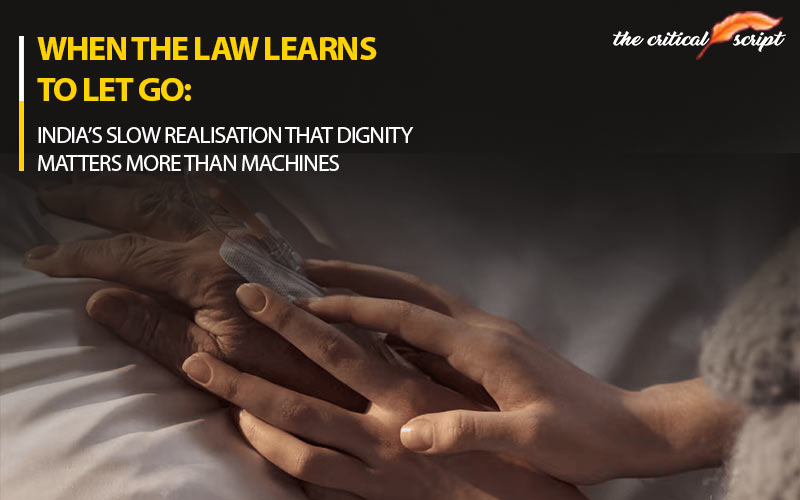
When the Law Learns to Let Go: India’s Slow Realisation That Dignity Matters More Than Machines
India’s debate on euthanasia has never been comfortable. It moves slowly, cautiously, often only after a human tragedy forces the country to confront difficult moral questions. The arc from Aruna Shanbaug to Harish Rana tells the story of how the law is gradually learning something medicine already knows. Sometimes letting go is not cruel. Sometimes it is dignity.
Shanbaug’s case first shook India in 2011. The Mumbai nurse had spent more than four decades in a vegetative state after a brutal assault inside the hospital where she worked. When a plea was filed seeking euthanasia, the Supreme Court of India refused to allow it in her case. Yet the judgment quietly changed Indian law forever. The court introduced the concept of passive euthanasia under strict safeguards, allowing withdrawal of life support in certain situations with judicial oversight. It was the first time the judiciary acknowledged that the right to life under Article 21 could also include the right to die with dignity.
For years, that principle remained largely theoretical.
Then came the case of Harish Rana. After a traumatic brain injury, Rana had lived for more than a decade in a permanent vegetative state, sustained entirely by medical support. His family approached the courts seeking permission to withdraw life-sustaining treatment. This time, the judiciary applied the principles that earlier cases had cautiously developed. Medical boards assessed the situation, the court reviewed the evidence, and permission for passive euthanasia was granted.
Legally, this decision was procedural. Morally, it was profound.
Modern medicine has become extraordinarily good at sustaining biological life. Machines can maintain breathing, feeding tubes can provide nutrition, and intensive care can keep organs functioning for years. But somewhere along the way, society has begun to confuse survival with living. A body can remain alive long after consciousness, autonomy, and hope have disappeared.
The real question India must confront is not whether death should be allowed. Death is inevitable. The question is whether the state should compel families to prolong suffering when medicine itself admits there is no recovery ahead.
Passive euthanasia is often misunderstood as choosing death. In reality, it is about acknowledging the limits of medicine and respecting the dignity of the person whose life has already slipped beyond recovery. It is not about ending life prematurely. It is about refusing to artificially stretch a life that has already reached its natural end.
The journey from Aruna Shanbaug to Harish Rana shows how the law evolves in India. Slowly. Reluctantly. Often after years of silence. But it also shows that empathy can eventually find its way into legal reasoning.
If Shanbaug’s case began the conversation, Rana’s case suggests that the country is finally beginning to understand it. In a system often accused of being rigid, the law has shown a rare moment of humility. It has been recognised that dignity cannot be measured by machines keeping a heart beating.
Sometimes, justice is not about preserving life at any cost. Sometimes, justice is about allowing life to end with grace.
Disclaimer: The opinions expressed in this article are those of the author's. They do not purport to reflect the opinions or views of The Critical Script or its editor.
National Related Posts










Newsletter!!!
Subscribe to our weekly Newsletter and stay tuned.
Related Comments