


 INDIA ASIAN GAMES MEDAL MONITOR
·
India: 🥇 0
| 🥈 0
| 🥉 0
| Total: 0
INDIA ASIAN GAMES MEDAL MONITOR
·
India: 🥇 0
| 🥈 0
| 🥉 0
| Total: 0
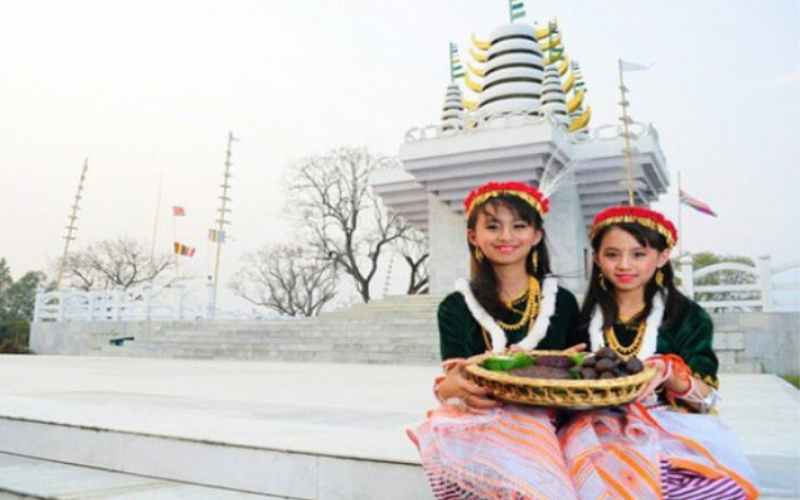
Sajibu Cheiraoba: Between Cosmology, Kingship, and Cultural Continuity
Sajibu Cheiraoba, widely recognized as the Meitei New Year, is a festival that marks renewal and new beginnings. It is the lunar New Year of the Meitei people, particularly those who follow Sanamahism, the traditional Meitei faith.
Yet, beneath its celebratory surface lies a complex interplay of cosmology, ritual authority, political history, and evolving identity. To understand Cheiraoba merely as a calendrical transition is to overlook its deeper significance, as a system through which Meitei society negotiates fate, order, and continuity.
Time,
Authority, and the Idea of “Cheiraoba”
The term Cheiraoba, derived from Chahi (year) and Laoba
(to declare), reflects more than a linguistic construction; it encodes a
politics of timekeeping. In pre-colonial Manipur, the announcement of the New
Year was not merely symbolic but a ritual act tied to royal authority, publicly
proclaimed through designated emissaries.
As noted by Naorem
Sanajaoba (1988), time in early Meitei society was structured through royal
and ritual institutions, reinforcing sovereignty and social order.
Origins in
Meitei Chronology: Tradition and Debate
Traditional Meitei historiography traces the origin of Cheiraoba to the
reign of King Maliya Fambalcha (Koi-Koi), believed to have ascended the throne
around 1359 BCE after succeeding King Kangba.
It is during his reign that the Meitei calendrical system, known as Mari-Fam (MF), is said to have been introduced, marking the formal beginning of
Cheiraoba as a structured system of year-counting. In this traditional
framework, the birth of Koi-Koi is considered 00 MF, and the calendar
progresses accordingly, placing, for instance, the year 2000 CE at
approximately 3334 MF.
However, such early chronologies remain subject to scholarly debate.
While sources like the Cheitharol Kumbaba provide important insights into royal
lineages and cultural memory, historians often classify these accounts as
mytho-historical rather than strictly empirical. The Meitei calendar itself,
though culturally significant and still in use, lacks a fully standardized and
widely published academic framework.
Cosmology
and the Ritualization of Uncertainty
Central to Sajibu Cheiraoba is the belief in Lai Khundin-naba - the annual assembly of deities during the month of Lamta
(March-April). The ritual of Shing
Shatpa (Wood Picking), involving
the counting and removal of sticks representing human lives, reflects a
worldview in which time is inseparable from fate.
Drawing on the work of Victor
Turner (1969), such practices can be understood as rituals of transition,
where societies symbolically confront mortality and uncertainty at moments of
temporal change.
Ritual as
Negotiation: Managing Uncertainty
Offerings to deities such as Sanamahi (the
guardian and protector of mankind), Leimarel (the mother of Sanamahi and the
goddess of earth, nature, and the household), and Lamaba Tumaba (protector
deity of the land or household) are not merely devotional acts but mechanisms
of negotiation with unseen forces. From a functionalist perspective (Malinowski,
1948), such rituals help societies cope with unpredictability, particularly
in agrarian contexts.
Cheiraoba thus becomes a ritual economy of protection, linking spiritual practice with material concerns like health, survival, and prosperity.
Saroi
Khangba and the Spectrum of the Sacred
The ritual of Saroi Khangba (the rituals performed to propitiate malevolent
spirits through sacred offerings), aimed at appeasing malevolent forces,
highlights a cosmology that does not divide the sacred into rigid binaries.
Instead, it acknowledges a spectrum of spiritual forces requiring balance.
As Clifford Geertz (1973) suggests, religion operates as a cultural system that provides meaning in contexts of uncertainty. The participation of women in these rituals further reflects the distributed nature of spiritual authority in Meitei society.
Ushil
Shinba: Ecology as Knowledge
The ritual of releasing Ngamu (snakehead fish) (Ushil Shinba) to predict future outcomes illustrates a worldview where nature
serves as a medium of interpretation. Such practices align with indigenous
knowledge systems that integrate ecology and spirituality (Berkes,
2012).
Cheithaba:
Kingship and the Management of Risk
The institution of Cheithaba, introduced during the reign of King Kyamba,
represents a form of ritual substitution, where an individual symbolically
absorbs misfortune on behalf of the king and the state.
This echoes the concept of the scapegoat described by James G. Frazer (1890),
illustrating how societies externalize risk to preserve authority and order.
Domestic
Space and Sacred Transition
The transformation of the household during Cheiraoba, through cleaning,
renewal, and ritual offerings, reflects what Mary
Douglas (1966) describes as the symbolic maintenance of order.
Here, the domestic space becomes a site of cosmological transition,
where everyday life intersects with the sacred.
Continuity,
Syncretism, and Modernity
Contemporary observances of Cheiraoba reveal layers of historical
interaction, indigenous Sanamahi traditions, Vaishnav influences, and broader
Indic calendrical systems. This reflects a process of cultural syncretism, as
discussed by scholars like Sanjib
Baruah (2005).
Rather than fragmentation, this plurality demonstrates resilience and
adaptation.
Critical
Reflection
Sajibu Cheiraoba offers a lens into how societies conceptualize time not
as a neutral progression, but as a moral and existential cycle shaped by
belief, power, and environment.
It compels us to ask:
· Who defines time?
·
How
do rituals mediate uncertainty?
·
How
does tradition adapt without losing continuity?
Time as a
Living System
Sajibu Cheiraoba is not merely a New Year festival; it is a living
system of meaning. It binds cosmology with kingship, ritual with survival, and
tradition with transformation.
The inclusion of early chronologies such as that of King Koi-Koi,
whether historically verifiable or not, underscores a deeper impulse:
👉 The desire to root time itself within a continuous
civilizational narrative.
In this sense, Cheiraoba is not just about the beginning of a year; it
is about the enduring human effort to understand time, fate, and existence.
Disclaimer: The opinions expressed in this article are those of the author's. They do not purport to reflect the opinions or views of The Critical Script or its editor.
Beliefs And Myths Related Posts







Newsletter!!!
Subscribe to our weekly Newsletter and stay tuned.
Related Comments