


 INDIA ASIAN GAMES MEDAL MONITOR
·
India: 🥇 0
| 🥈 0
| 🥉 0
| Total: 0
INDIA ASIAN GAMES MEDAL MONITOR
·
India: 🥇 0
| 🥈 0
| 🥉 0
| Total: 0
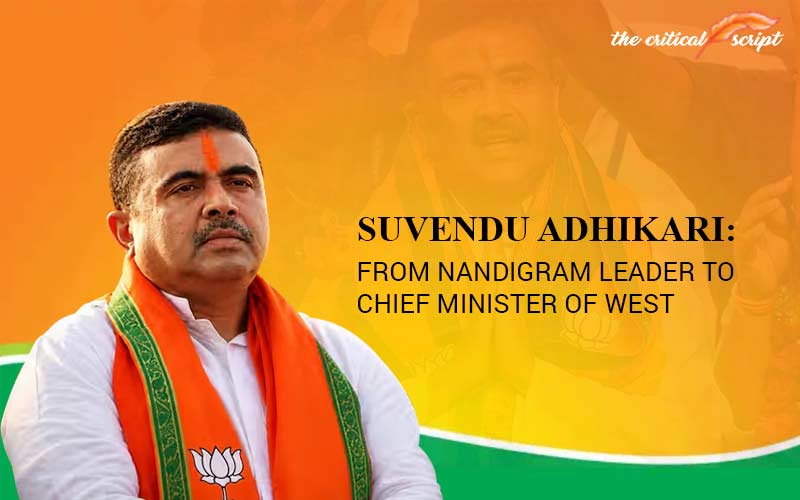
Suvendu Adhikari: From Nandigram Leader to Chief Minister of West Bengal
SuvenduAdhikari emerged as one of the most influential political figures in West Bengal after becoming the state’s first Bharatiya Janata Party (BJP) Chief Minister in May 2026. His political rise from a grassroots organiser in East Midnapore to the head of the Bengal government has been one of the most dramatic journeys in contemporary Indian politics.
Birth and Family Background
SuvenduAdhikari was born on 15 December 1970 in Karkuli village of PurbaMedinipur district, West Bengal. He belongs to a politically influential Bengali family deeply rooted in the politics of coastal Bengal.
His father, SisirAdhikari,
is a veteran politician who served as a Member of Parliament and also held
ministerial responsibilities in the UPA government led by former Prime Minister
Manmohan Singh. His mother is GayatriAdhikari.
Growing up in the
politically active environment of Contai (Kanthi), Suvendu was exposed to
grassroots politics, public mobilisation, and organisational work from a very
young age. His family’s strong influence in East Midnapore later became one of
the foundations of his political network.
Early Childhood and Personality
SuvenduAdhikari spent much
of his childhood in the Contai region of PurbaMedinipur. Known for his
disciplined lifestyle and strong connection with ordinary people, he developed
a reputation for being highly organised and politically sharp even during his
youth.
Unlike many leaders who
entered politics through student activism in metropolitan institutions,
Suvendu’s political understanding evolved largely through district-level
political exposure, rural organisational work, and direct interaction with
people in villages and semi-urban areas.
He is known for maintaining
a relatively low-profile personal life and remains unmarried.
Education
SuvenduAdhikari completed
his higher education in West Bengal and later earned a Master of Arts (M.A.)
degree from RabindraBharati University.
Though academics were
important, politics and public engagement remained his primary focus from an
early stage.
Entry into Politics
SuvenduAdhikari began his
political career with the Indian National Congress during the 1990s. In 1995,
he was elected as a councillor in the Kanthi Municipality.
However, his political rise
accelerated after joining the All India Trinamool Congress, founded by Mamata
Banerjee.
During the late 1990s and
2000s, Suvendu became one of Mamata Banerjee’s most trusted lieutenants and
played a key role in expanding the Trinamool Congress across rural Bengal.
The Nandigram Movement and Rise to Prominence
SuvenduAdhikari became
nationally prominent during the Nandigram movement of 2007, one of the most
defining political agitations in Bengal’s modern history.
The protests erupted
against a proposed land acquisition plan for a Special Economic Zone (SEZ).
Suvendu emerged as one of the strongest faces of the anti-land acquisition
movement and became a symbol of grassroots resistance in Bengal politics. The
movement significantly weakened the Left Front government and helped pave the
way forMamata Banerjee’s eventual rise to power in 2011.
His influence in East
Midnapore grew immensely after Nandigram, and he established himself as one of
the most powerful regional leaders in Bengal.
Parliamentary and Ministerial Career
SuvenduAdhikari was elected
to the Lok Sabha from the Tamluk constituency in 2009 and was re-elected in
2014.
Later, he shifted to state
politics and became an MLA from Nandigram. During the Trinamool Congress
government, he held several important portfolios, including:
●
Transport
●
Irrigation and Water
Resources
●
Environment
He earned a reputation for
strong organisational management and administrative efficiency.
Fallout with Mamata Banerjee and Shift to BJP
The biggest turning point
in SuvenduAdhikari’s career came in 2020, when he left the Trinamool Congress
after growing differences with the party leadership. His exit was seen as a
massive political setback for Mamata Banerjee because he had been one of the
party’s strongest grassroots leaders.
Soon after, he joined the
Bharatiya Janata Party and rapidly became the face of the BJP in West Bengal.
Defeating Mamata Banerjee in Nandigram
In the 2021 West Bengal
Assembly Election, SuvenduAdhikari contested against Mamata Banerjee from the
high-profile Nandigram constituency.
In one of the most dramatic
electoral battles in Bengal’s history, he defeated Mamata Banerjee, gaining
nationwide attention and becoming the Leader of the Opposition in the West
Bengal Legislative Assembly.
The victory transformed him
into the BJP’s most prominent leader in Bengal.
Becoming Chief Minister of West Bengal
The 2026 West Bengal
Assembly elections proved historic as the BJP secured a majority in the state
for the first time. SuvenduAdhikari was unanimously chosen as the BJP
Legislature Party leader and took oath as the 9th Chief Minister of West Bengal
on 9 May 2026 at Kolkata’s Brigade Parade Ground.
His appointment marked:
●
The end of 15 years of
Trinamool Congress rule
●
The BJP’s first-ever
government in Bengal
●
A major political shift in
eastern India
SuvenduAdhikari’s political
journey is regarded as one of the most remarkable transformations in Indian
politics, from being Mamata Banerjee’s close associate to becoming the leader
who ultimately ended the Trinamool Congress era in West Bengal.
His rise reflects the
changing political landscape of Bengal and the growing influence of the BJP in
eastern India.
Disclaimer: The opinions expressed in this article are those of the author's. They do not purport to reflect the opinions or views of The Critical Script or its editor.
Politics Related Posts








Newsletter!!!
Subscribe to our weekly Newsletter and stay tuned.
Related Comments