


 INDIA ASIAN GAMES MEDAL MONITOR
·
India: 🥇 0
| 🥈 0
| 🥉 0
| Total: 0
INDIA ASIAN GAMES MEDAL MONITOR
·
India: 🥇 0
| 🥈 0
| 🥉 0
| Total: 0
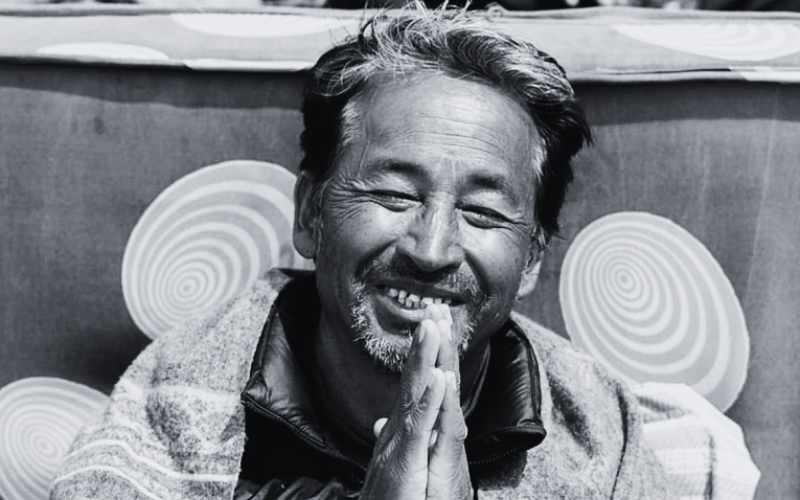
Who Is Sonam Wangchuk? The Biography of India's Engineer, Education Reformer, Ice Stupa Innovator and Voice of Ladakh
From revolutionizing education in Ladakh to inventing the Ice Stupa and leading campaigns for environmental protection, Sonam Wangchuk has become one of India's most influential public intellectuals. Here's his complete biography, achievements, controversies, and lasting legacy.
Few individuals in modern India have successfully combined the roles of engineer, educator, innovator, entrepreneur, and environmental activist quite like Sonam Wangchuk. Best known as the inspiration behind the iconic character of Phunsukh Wangdu in the Bollywood blockbuster 3 Idiots, Wangchuk's real-life story is far more remarkable than fiction. Over the last three decades, he has transformed education in Ladakh, pioneered climate-resilient technologies such as the Ice Stupa, and emerged as one of the country's strongest voices advocating for sustainable development in the fragile Himalayan region.
While supporters celebrate him as a visionary working to protect both people and nature, critics argue that some of his activism raises difficult questions about balancing environmental conservation with economic development and national security. Regardless of these differing perspectives, Sonam Wangchuk remains one of the most influential thinkers shaping conversations on education, climate change, and the future of the Himalayas.
Early Life: A Childhood That Shaped a Visionary
Born on 1 September 1966 in the village of Uleytokpo in Leh district, Ladakh, Sonam Wangchuk spent his formative years in one of the most remote and climatically challenging regions of India. During his childhood, Ladakh remained cut off from the rest of the country for several months every winter because of heavy snowfall. Access to quality education, healthcare, and infrastructure was extremely limited.
His early schooling exposed him to one of the biggest shortcomings of India's education system. Although Ladakhi was his mother tongue, his school taught entirely in Urdu, a language he neither spoke nor understood. Like many children in remote regions, Wangchuk struggled academically, not because he lacked intelligence, but because the education system failed to accommodate local languages, culture, and realities.
This experience profoundly influenced his thinking and laid the foundation for his lifelong mission of reforming education.
Education and the Birth of SECMOL
After completing his schooling, Wangchuk pursued Mechanical Engineering at the National Institute of Technology (then Regional Engineering College) in Srinagar. Rather than pursuing a conventional engineering career, he returned to Ladakh determined to address the systemic failures that had affected thousands of students like himself.
In 1988, he co-founded the Students' Educational and Cultural Movement of Ladakh (SECMOL). At that time, government schools in Ladakh reported failure rates of over 90 percent in board examinations. Most observers blamed students or teachers. Wangchuk instead questioned the education system itself.
SECMOL rejected rote memorization and examination-driven learning. Students learned by building solar-powered homes, generating electricity, managing farms, operating businesses, repairing machinery, and solving practical engineering challenges. Responsibility became an essential part of education. Students once labelled as academic failures developed confidence and practical skills that enabled them to become entrepreneurs, teachers, engineers, and community leaders.
Today, SECMOL is internationally recognized as one of India's most successful models of experiential and community-based education.
The Ice Stupa: Sonam Wangchuk's Revolutionary Innovation
Among Sonam Wangchuk's many achievements, the invention of the Ice Stupa stands out as his most celebrated engineering innovation.
Climate change has significantly altered glacier melt patterns across Ladakh. Water often becomes available during winter and early spring when farmers have little use for it, leaving them without sufficient irrigation during the sowing season.
To solve this problem, Wangchuk developed the Ice Stupa - a cone-shaped artificial glacier created by spraying water into freezing winter air. Because of its unique shape, the structure melts slowly during spring, releasing water precisely when farmers need it.
The innovation has drawn worldwide attention as a practical and low-cost climate adaptation solution. Today, Ice Stupas have inspired similar projects in other mountainous regions facing water scarcity and glacier retreat.
Sustainable Engineering Beyond the Ice Stupa
Sonam Wangchuk's work extends far beyond a single invention. Through SECMOL and several independent initiatives, he has promoted passive solar architecture that enables buildings to remain warm during Ladakh's harsh winters without conventional heating systems.
His structures combine traditional Himalayan construction techniques with modern engineering principles, reducing energy consumption while using locally available materials. These projects have become models for sustainable architecture in cold desert environments.
Throughout his career, Wangchuk has consistently argued that technology should be affordable, locally designed, and environmentally responsible rather than dependent on expensive imported solutions.
The Real Story Behind 3 Idiots
For millions of Indians, Sonam Wangchuk became a familiar name after the release of Rajkumar Hirani's 2009 film 3 Idiots. The character Phunsukh Wangdu, played by Aamir Khan, was inspired by Wangchuk's educational philosophy and inventive personality.
Although the film fictionalized much of the narrative, its central message that creativity, curiosity, and practical learning matter more than rote memorization closely reflected Wangchuk's real work through SECMOL.
Ironically, while the film introduced his ideas to a national audience, many viewers remained unaware of the remarkable educational reforms and engineering innovations that had inspired the character.
From Engineer to Environmental Activist
As climate change intensified across the Himalayas, Sonam Wangchuk increasingly focused on environmental conservation. He began warning that glaciers, rivers, and mountain ecosystems should not be viewed merely as resources for exploitation but as ecological systems supporting millions of people across northern India.
His campaigns have consistently highlighted the dangers of glacier retreat, unregulated tourism, groundwater depletion, unsustainable infrastructure, and ecological degradation. Wangchuk argues that development in the Himalayas must respect environmental limits if future generations are to benefit from these fragile ecosystems.
Sonam Wangchuk and the Ladakh Movement
Following Ladakh's transition into a Union Territory in 2019, Sonam Wangchuk emerged as one of the most prominent voices advocating for constitutional safeguards, environmental protection, and greater participation of local communities in governance.
His hunger strikes, public marches, and awareness campaigns brought national attention to issues concerning land rights, ecological conservation, tribal identity, and sustainable development. He has consistently argued that rapid development without adequate environmental safeguards could permanently damage Ladakh's unique landscape and culture.
His campaigns have transformed what was once considered a regional issue into a national conversation about climate resilience and responsible governance in India's Himalayan frontier.
Awards and International Recognition
Sonam Wangchuk's work has earned widespread international recognition. He received the Rolex Award for Enterprise in 2016 for the Ice Stupa project and was honoured with the prestigious Ramon Magsaysay Award in 2018 for his contributions to education, innovation, and community leadership. His ideas have been featured in international forums discussing climate adaptation, sustainable architecture, and educational reform.
Criticism and Controversies
As Wangchuk's influence has expanded, so too has public scrutiny of his activism. Critics argue that some of his campaigns simplify highly complex questions involving development, governance, and national security. They contend that border regions such as Ladakh require better roads, infrastructure, investment, and economic opportunities alongside environmental protection.
Some policymakers believe that opposing certain development projects may slow economic progress in a strategically important region bordering China and Pakistan. Others question whether symbolic protests alone can adequately address the practical challenges of governance and long-term planning.
Supporters, however, argue that Wangchuk has played a crucial role in ensuring that ecological concerns are not overshadowed by rapid development. They maintain that sustainable growth and environmental conservation must complement rather than compete with each other.
The Legacy of Sonam Wangchuk
Sonam Wangchuk's influence extends far beyond education or engineering. He has challenged conventional ideas of development by demonstrating that innovation should emerge from local needs rather than imported models. His work has inspired educators, engineers, environmentalists, and policymakers across India and abroad.
Whether through SECMOL, the Ice Stupa, sustainable architecture, or his advocacy for Ladakh, Wangchuk has consistently promoted a vision of progress rooted in resilience, sustainability, and community participation.
History may remember him not only as the man who inspired 3 Idiots, but as the engineer who transformed education, developed groundbreaking climate solutions, and compelled India to rethink the future of its Himalayan region.
Disclaimer: The opinions expressed in this article are those of the author's. They do not purport to reflect the opinions or views of The Critical Script or its editor.
Social Related Posts








Newsletter!!!
Subscribe to our weekly Newsletter and stay tuned.
Related Comments