


 INDIA ASIAN GAMES MEDAL MONITOR
·
India: 🥇 0
| 🥈 0
| 🥉 0
| Total: 0
INDIA ASIAN GAMES MEDAL MONITOR
·
India: 🥇 0
| 🥈 0
| 🥉 0
| Total: 0
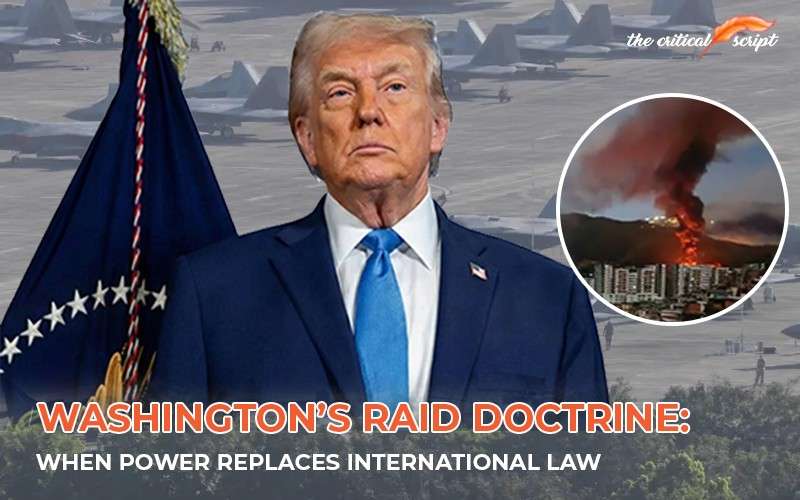
Washington’s Raid Doctrine: When Power Replaces International Law
The US arrest of Venezuela’s sitting
president Nicolás Maduro is not law enforcement, it is coercion dressed up as
justice. The United States was not at war with Venezuela. There was no UN
mandate. There was no imminent threat. What remains is a unilateral strike
against a sovereign state, and that is precisely what international law exists
to prevent.
If Washington believes crimes were
committed, the path is clear and well-established: multilateral action through
the United Nations, international courts, or diplomatic pressure backed by
global consensus. Anything else is not accountability, it is muscle-flexing.
Bypassing these institutions signals that rules apply only when convenient, and
that power, not law, decides guilt.
This sets a dangerous precedent. If
the world’s most powerful country can raid another nation to seize its leader
without war or mandate, what stops others from doing the same? Today it is
Venezuela. Tomorrow it could be any state deemed “unacceptable” by a stronger
rival. That is not a rules-based order; it is a return to gunboat diplomacy.
Equally troubling is the denial of
Venezuelans’ agency. Political legitimacy, however contested, must ultimately
be decided by a country’s people, not by foreign commandos. External force does
not strengthen democracy; it discredits it.
Normalize this doctrine and
international law collapses into selective enforcement. Sovereignty becomes
conditional. Stability becomes optional. The cost will be paid not by great
powers, but by smaller nations everywhere.
Disclaimer: The opinions expressed in this article are those of the author's. They do not purport to reflect the opinions or views of The Critical Script or its editor.
International Related Posts









Newsletter!!!
Subscribe to our weekly Newsletter and stay tuned.
Related Comments